


How Cold Is Too Cold for Dogs? A Temperature Guide by Size and Coat
PetGearPal is reader-supported. If you buy through links on this page, we may earn a commission at no extra cost to you. As an Amazon Associate, we earn from qualifying purchases.
Most dogs are fine outside above 45°F. Between 32°F and 45°F, small, short-haired, very young, and senior dogs start to need protection. Below 32°F, keep walks short for most dogs. Below 20°F, every dog is at risk of frostbite and hypothermia, and outdoor time should be limited to quick bathroom breaks.
That’s the rule of thumb vets and the AKC point to. But temperature alone doesn’t tell the whole story. Wind, wet, your dog’s size, and how used to the cold they are matter just as much.
I’ve owned dogs my whole life and spent every one of those winters in the Northeast. The lesson that took me longest to learn: the thermometer reading that worries me most isn’t the coldest one. It’s 34°F with freezing rain and wind, when a dog’s coat gets soaked and stops insulating.
How Cold Is Too Cold? The Chart
| Temperature | Small or thin-coated dogs (Chihuahua, Greyhound, Frenchie) | Medium dogs with average coats (Beagle, Lab, Boxer) | Large or double-coated dogs (Husky, Bernese, Malamute) |
|---|---|---|---|
| 45°F and above | Generally fine | Fine | Fine |
| 32–45°F | Coat or sweater; watch for shivering | Generally fine; watch seniors | Fine |
| 20–32°F | Coat required; walks 10–15 min | Short walks; consider a coat and paw protection | Fine for normal walks |
| 0–20°F | Bathroom breaks only | Bathroom breaks and short walks only | Limit to 30–60 min; protect paws |
| Below 0°F | Bathroom breaks only, then right back in | Bathroom breaks only | Short outings only |
Adjust down one row (treat it as colder) if: it’s windy, it’s raining or sleeting, your dog is wet, your dog is a puppy or a senior, or your dog has arthritis, diabetes, heart disease, or kidney disease.
Adjust up one row if: it’s sunny and still, and your dog is a cold-weather breed who’s been outside regularly all fall and is used to it.
Why Size and Coat Matter So Much
Small dogs lose heat fast. A small body has more skin surface relative to its volume, so it sheds heat faster. A 6-pound Chihuahua gets cold far sooner than a 60-pound Lab on the same walk.
Coat type matters more than coat length. Double-coated breeds like Huskies, Malamutes, and Bernese Mountain Dogs have a dense undercoat that traps warm air. Single-coated breeds, even long-haired ones, don’t insulate nearly as well. Short single coats (Greyhounds, Whippets, Boxers, Pit Bulls, Dobermans) give almost no protection.
Body fat is insulation. Lean, deep-chested breeds like Greyhounds feel the cold more than stockier dogs of the same size.
Age and health change the math. Puppies can’t regulate body temperature well yet. Senior dogs often have less muscle mass and slower circulation, and cold makes arthritis worse. If your older dog is stiffer on winter mornings, that’s not your imagination. Our guide to signs your dog is in pain covers what to watch for.
Acclimation is real. A dog who’s been outside every day since September handles January far better than a dog who spends the fall on the couch and gets shoved into the first snowstorm.
Signs Your Dog Is Too Cold
Dogs don’t always complain. Watch for:
- Shivering or trembling
- Lifting paws off the ground, or limping on snow or ice
- Tucked tail and hunched posture
- Whining or trying to turn back home
- Slowing down or stopping on a walk
- Seeking shelter (pressing against you, heading for the porch)
Bring your dog inside and warm them up right away if you see any of these.
Hypothermia: When It’s an Emergency
Hypothermia happens when a dog’s body temperature drops below normal (a dog’s normal is about 101–102.5°F). Signs include:
- Intense shivering, then shivering that stops (a bad sign, not a good one)
- Lethargy, weakness, or confusion
- Slow, shallow breathing
- Pale or gray gums
Wrap your dog in warm (not hot) blankets, get them somewhere warm, and call your vet or an emergency clinic. Don’t use heating pads or hot water directly on the skin; rewarming too fast can cause burns and shock.
Frostbite: Ears, Tail, and Paws
Frostbite usually hits the tips of the ears, the tail, and the paw pads. Frostbitten skin may look pale, gray, or bluish and feel cold and hard. As it thaws it can turn red, swell, and become painful. It sometimes doesn’t show for a few days.
If you suspect frostbite, warm the area gently with lukewarm water (not hot), don’t rub it, and call your vet.
How Cold Is Too Cold for Dog Paws?
Paw pads are tougher than they look, but winter attacks them three ways:
- Ice and packed snow that balls up between the toes and causes cuts and cracking.
- Road salt and chemical de-icers, which burn pads and are toxic if your dog licks them off. In the Northeast, this is the one I worry about most. Some towns salt sidewalks so heavily that a single walk leaves pads cracked.
- Dry, cold air that splits pads the same way it chaps your hands.
If your dog is constantly licking or chewing their paws after winter walks, salt irritation is a likely culprit. See why dogs lick their paws for other causes.
What helps: wipe paws with a warm, damp cloth after every walk; trim the fur between the pads so ice can’t ball up; use paw wax or boots on salted routes; and use pet-safe ice melt on your own steps and driveway.
Do Dogs Need Coats?
Dogs that benefit from a coat below 45°F: small breeds, short- or thin-coated breeds, lean breeds like Greyhounds and Whippets, puppies, seniors, and dogs with health conditions.
Dogs that usually don’t need one: double-coated breeds like Huskies, Malamutes, Samoyeds, Bernese Mountain Dogs, and Great Pyrenees. A coat can make them overheat.
A good dog coat covers the chest and belly (where many short-coated dogs have the thinnest fur), stays put without rubbing the armpits, and is water-resistant. A wet sweater is worse than no sweater at all.
Gear That Actually Helps in Winter
These are the four products that solve the most winter problems for the least money.
Kurgo Loft Dog Jacket: Best Everyday Winter Coat
(4.5★ · 7,400+ reviews at the time of writing) View on Amazon →
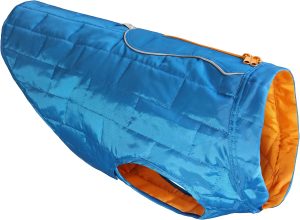
A reversible, water-resistant quilted jacket with a reflective trim and a harness opening. It’s warm without being bulky, so most dogs tolerate it, and it’s inexpensive enough to keep two (one drying while the other’s in use).
Skip it if: your dog plows through deep snow and needs full belly coverage. Look for a coat with a full-wrap underside instead.
The honest downside: Getting the size right takes care. Measure your dog’s back length and chest girth and compare them with Kurgo’s size chart before ordering.
Musher’s Secret Paw Wax: Best Paw Protection Without Boots
(4.6★ · 36,000+ reviews at the time of writing) View on Amazon →
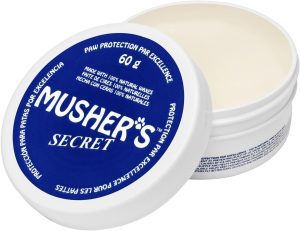
A food-grade wax you rub onto the pads before a walk. It creates a thin barrier against salt and ice and helps keep snow from balling between the toes. It’s been a sled-dog staple for years, and it’s the easiest thing to try for a dog who won’t tolerate boots.
Joe’s take: For a typical salted Northeast sidewalk, this does 80% of what boots do for a fraction of the hassle.
The honest downside: It’s not a full barrier. On heavily salted routes or long walks below 20°F, boots protect better.
PawZ Rubber Dog Boots: Best Budget Boots
(3.5★ · 28,000+ reviews at the time of writing) View on Amazon →
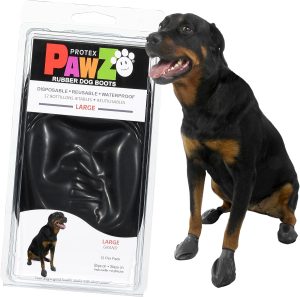
Thin, balloon-like rubber booties that come in a 12-pack. Because they’re so thin, dogs can still feel the ground, which makes them more willing to walk normally than with stiff boots. They keep salt and slush completely off the pads.
Skip it if: your dog has long nails, or you need boots for hiking. They tear on rough surfaces.
The honest downside: That 3.5-star rating is mostly about getting them on. They take practice, they can be hard to pull over big paws, and the wrong size slips off. Measure paw width, and expect a couple to tear in the first week while you learn.
Ruffwear Grip Trex Boots: Best Durable Boots
(4.1★ · 2,400+ reviews at the time of writing) View on Amazon →

Real boots with rubber soles, a breathable upper, and a cinch strap. They last for seasons instead of weeks and grip well on ice and rock, which makes them the better choice for long winter hikes.
The honest downside: They’re sold in pairs, so you’ll need two packs (about $100) for all four paws, and most dogs walk like they’re in high heels for the first few outings. Do short practice sessions indoors first.
Safe Paw Ice Melter: Best for Your Own Driveway and Steps
(4.5★ · 11,600+ reviews at the time of writing) View on Amazon →
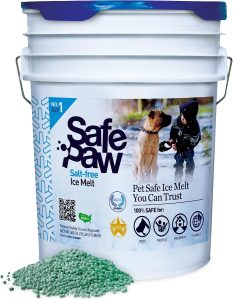
A salt-free ice melt that’s gentler on paws and safer if your dog licks it. You can’t control what the town puts on the sidewalk, but you can control your own steps.
The honest downside: It’s expensive compared with rock salt and works more slowly in very low temperatures. Many owners use it on steps and walkways only, where their dog actually walks.
8 Winter Safety Tips Every Dog Owner Should Know
- Shorten walks, don’t skip them. Two or three short walks are better than one long one when it’s below freezing.
- Wipe paws after every walk. Salt and de-icers are irritating and toxic if licked.
- Watch for antifreeze. Ethylene glycol tastes sweet and is deadly in small amounts. Clean up spills, store it sealed, and call your vet immediately if you think your dog drank any.
- Never leave a dog in a cold car. A car in winter acts like a refrigerator and can get dangerously cold quickly.
- Keep them visible. Winter days are short. A reflective coat or LED collar matters when you’re walking at 5 p.m. in December.
- Stay off frozen ponds and lakes. Ice that holds a dog may not hold you when you go in after them.
- Give older dogs a warm, padded place to sleep away from drafts and cold floors. Our best orthopedic dog beds for seniors are worth a look if your dog stiffens up in cold weather.
- Adjust food for activity, not the season. Dogs that spend a lot of time outdoors may need more calories in winter; couch-bound dogs often need fewer. Check with your vet. Our guide on how much to feed your dog can help.
Cold Weather Dog FAQ
What temperature is too cold to walk a dog? Below 20°F, keep walks to 10–15 minutes for most dogs, and limit small or thin-coated dogs to bathroom breaks. Cold-weather breeds acclimated to winter can handle longer walks, but watch their paws.
Can dogs sleep outside in winter? It’s not recommended. Even cold-weather breeds should come inside when temperatures drop below 20°F, and most dogs shouldn’t sleep outside below 45°F.
Do dogs get cold at night inside the house? They can, especially small, short-coated, and senior dogs, or dogs who sleep on cold tile or near drafty doors. A raised or padded bed and a blanket help.
Is 40 degrees too cold for a dog? For most dogs, no. Small, short-coated, very young, or senior dogs may get uncomfortable around 40°F and benefit from a sweater, especially if it’s wet or windy.
Can dogs get frostbite? Yes. Ears, tail tips, and paw pads are most at risk, especially below 20°F or when the dog is wet. Call your vet if skin looks pale, gray, or bluish and feels hard and cold.
Do dogs need boots in the snow? Not always. Paw wax works for many dogs on short walks. Boots are most useful on heavily salted sidewalks, during long outings below 20°F, and for dogs whose pads crack in winter.
Which dog breeds handle cold best? Double-coated northern breeds: Siberian Huskies, Alaskan Malamutes, Samoyeds, Bernese Mountain Dogs, Great Pyrenees, Newfoundlands, and Saint Bernards.
Related reading: How Much Exercise Does Your Dog Need? | Why Does My Dog Lick Their Paws? | Best Dog Beds | Signs Your Dog Is in Pain
2 Comments
Comments are closed.