Best Dog Food for Senior Dogs in 2026: 5 Picks for Aging Dogs, Compared
PetGearPal is reader-supported. If you buy through links on this page, we may earn a commission at no extra cost to you. As an Amazon Associate, we earn from qualifying purchases.
Last updated: October 2026 | ~2,000 words
Senior Dogs Have Different Nutritional Needs. Most Dog Food Aisles Don’t Make It Easy to Tell What That Means.
Walk into the pet food aisle looking for “senior” dog food and you’ll find a wall of products with the word “senior” on them that have no consistent nutritional standard behind it — because in the U.S., AAFCO doesn’t require senior dog food to meet any specific nutritional profile. “Senior” is a marketing label, not a regulated category.
That matters because senior dogs’ actual nutritional needs vary considerably based on health, breed, size, and what’s happening with their body as they age. Some senior dogs need fewer calories to avoid weight gain; others need more protein to maintain muscle mass. Some need kidney-friendly formulas; others need joint support. Getting this right isn’t just a quality-of-life question — it has real impact on how long and how comfortably a dog lives.
This guide cuts through the marketing and covers what senior dogs actually need nutritionally, what to look for in a formula, and the specific products worth buying.
What age counts as “senior”? Smaller breeds age more slowly — a 10-lb dog is generally considered senior at 10–11 years. Giant breeds age faster — a Great Dane may be senior at 5–6 years. Most medium breeds hit senior status around 7–8 years.
What Senior Dogs Actually Need (and What Changes)
Protein: More Than You Think
The biggest nutritional myth about senior dogs is that they need less protein. This was the prevailing view for decades, driven largely by concerns about kidney disease. The current evidence points in the opposite direction: healthy senior dogs need as much or more protein than adults to maintain muscle mass, which declines naturally with age.
The kidney-protein connection is real but narrow — dogs with diagnosed chronic kidney disease do need protein restricted. Healthy senior dogs with normal kidney function benefit from high-quality protein, not restricted protein. Look for a named meat source (chicken, beef, salmon) as the first ingredient.
Calories: Usually Fewer
Most senior dogs have reduced activity levels and slower metabolisms, which means maintaining weight on the same calories they ate as younger dogs. Weight gain in senior dogs accelerates joint deterioration, increases cardiovascular strain, and shortens lifespan. Look for formulas that are slightly lower in fat, or simply feed appropriate portions of a high-protein adult formula.
Joint Support
Glucosamine and chondroitin added to senior dog food is common but doses are typically too low to be therapeutically meaningful — these additives are more marketing than medicine in most dog food formulas. A dedicated joint supplement provides much more reliable dosing. If joint health is a priority, pair quality food with a proper supplement — our guide to the best dog joint supplements for senior dogs covers what actually works.
Digestibility
Older dogs often have reduced digestive efficiency. Highly digestible proteins (eggs, chicken, fish) and limited filler ingredients become more important as dogs age. Fresh, raw, and gently cooked foods tend to be significantly more bioavailable than extruded kibble, which is part of why senior dogs often respond visibly well to a fresh food transition.
Kidney and Organ Health
For dogs without diagnosed disease, moderate phosphorus levels are sensible. For dogs with diagnosed kidney disease, a veterinary prescription diet (like Royal Canin Renal Support or Hill’s k/d) may be appropriate — work with your vet on this. This article covers healthy senior dogs, not dogs with diagnosed conditions.
Comparison Table: Best Dog Food for Senior Dogs (2026)
| Food | Type | Best For | Price Range |
|---|---|---|---|
| Brothers Complete Turkey & Egg | Dry kibble | Allergy-prone seniors, budget-conscious | ~$118/25 lb |
| We Feed Raw (senior plan) | Raw, frozen | Maximum bioavailability, joint support | Custom subscription |
| Only Natural Pet MaxMeat Air Dried | Air-dried | Kibble convenience with raw benefits | ~$82/5.5 lb |
| Instinct RawBoost (Real Chicken) | Kibble + raw | Transition from kibble, easy feeding | ~$83/21 lb |
| Hill’s Science Diet Senior | Dry kibble | Vet-recommended, budget accessible | ~$87/33 lb |
Joe’s take: After a lifetime of dogs, the senior-food mistake I see most isn’t the brand. It’s the portion. Older dogs slow down gradually, and most owners keep filling the bowl the same way they did at age 5. Weigh your dog once a month, and cut back 10% at a time if the number creeps up. And if you live somewhere with real winters like I do, keep an eye on stiff joints when it gets cold. Our guide to how cold is too cold for dogs covers what older dogs need.
Our Top Picks
🥇 1. Brothers Complete Turkey & Egg Advanced Allergy Care — Best for Senior Dogs with Sensitivities
Price: $117.99 for a 25-lb bag, or $31.99 for 5 lb, on Brothers’ site at the time of writing. Shop Brothers Complete →

Brothers Complete isn’t marketed specifically as a senior food, but it’s one of the best options for senior dogs for a specific reason: it uses turkey and egg as the sole protein sources, making it one of the cleanest, most hypoallergenic formulas available. This matters for senior dogs because food sensitivities often develop or worsen with age, and many dogs who’ve eaten chicken or beef their whole lives develop reactions to those proteins in their later years.
The formula is grain-inclusive — using oatmeal and barley rather than corn or wheat — which provides digestible carbohydrates without the inflammatory potential of lower-quality grains. Protein content is high (32%), directly addressing the muscle-maintenance needs of aging dogs. Made in the USA with no artificial preservatives, colors, or flavors.
The “Advanced Allergy Care” designation reflects its design for sensitive dogs, not a gimmick — the limited protein sources, digestive enzymes, and probiotic support are genuine formulation choices that benefit senior digestive systems specifically.
What we love:
- Limited protein sources ideal for dogs developing late-onset food sensitivities
- High protein (32%) supports senior muscle maintenance
- Digestive enzymes and probiotics support gut health
- No corn, wheat, soy, or artificial additives
- USA-made
Watch out for:
- Premium price point
- Turkey-and-egg only — not suitable if your dog has sensitivities to those specific proteins
Best for: Senior dogs with food sensitivities or skin/coat issues, dogs transitioning off chicken or beef-based foods, owners wanting a clean high-protein formula without going raw
🥈 2. We Feed Raw — Best for Senior Dogs Needing Maximum Nutrition
Price: From $8.89 per pound, with 40% off your first box at the time of writing. See our We Feed Raw review for monthly costs by dog size. Shop We Feed Raw →
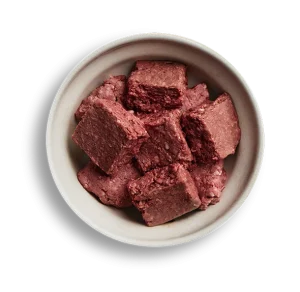
Raw feeding benefits senior dogs in specific, meaningful ways: higher bioavailability means more nutrients actually absorbed from less food, reduced carbohydrate load helps with weight management, and the moisture content of raw food (roughly 70% versus 10% in kibble) supports kidney and urinary health — a real consideration as dogs age.
We Feed Raw ships pre-portioned raw meals in single-protein formulas — useful for senior dogs with sensitivities, and simple to adapt to a senior dog’s reduced caloric needs by adjusting portion size. The pathogen-testing protocol on every batch addresses the food safety concern most commonly raised about raw feeding.
Senior dogs transitioning to raw from kibble should do so gradually over 7–10 days. Many owners report visible improvements in coat, energy, and stool quality within 2–3 weeks of transitioning a senior dog.
What we love:
- Superior bioavailability compared to kibble — important for dogs with reduced digestive efficiency
- Moisture content supports kidney and urinary health
- Single-protein options simplify allergy management
- Portion control easy to calibrate for seniors with lower caloric needs
Watch out for:
- Requires freezer space and thaw planning
- Not suitable for immunocompromised households without precautions
- Higher cost than kibble
Best for: Senior dogs whose owners are comfortable with raw feeding, dogs with chronic digestive issues unresolved on kibble, senior dogs needing high-protein low-carbohydrate nutrition
🥉 3. Only Natural Pet MaxMeat Air Dried — Best Convenience/Quality Balance
Price: $32.99 for 2 lb or $81.99 for 5.5 lb at the time of writing. Shop Only Natural Pet →
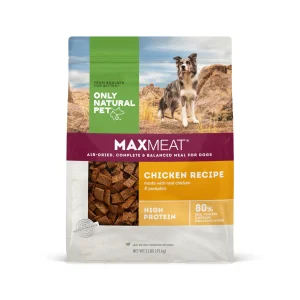
Air-dried food occupies a useful middle ground: the air-drying process removes moisture slowly at low temperatures, preserving more nutrients than high-heat extrusion while producing a shelf-stable product that doesn’t require freezing. Texture and handling are similar to kibble, making it significantly more convenient than raw for many senior dog owners.
Only Natural Pet’s MaxMeat formula is meat-forward — the first several ingredients are named animal proteins, with minimal plant-based filler. The protein density per serving is significantly higher than standard kibble. For senior dogs with reduced appetite (common in aging dogs), the palatability of air-dried food is a practical advantage — most dogs find it more appealing than kibble.
What we love:
- Shelf-stable convenience with near-raw nutritional profile
- High palatability — useful for senior dogs with reduced appetite
- No freezer required — easier for travel or households without dedicated freezer space
- Clean ingredient list with minimal filler
Watch out for:
- Higher cost per pound than kibble (though feeding amounts are much smaller)
- Fewer formula options than We Feed Raw or Brothers Complete
Best for: Senior dog owners who want fresh-food quality without raw handling, dogs with picky appetites, travel or households without freezer access
4. Instinct Raw Boost — Best Kibble-Plus Option for Hesitant Owners
Price: ~$83 for a 21-lb bag (4.5★ · 570+ reviews at the time of writing) View on Amazon →

Instinct Raw Boost is a hybrid product: high-protein cage-free chicken kibble with freeze-dried raw pieces mixed in. It provides a higher-quality nutritional profile than standard kibble while remaining in a format familiar to dogs and owners who aren’t ready to commit to fully raw or fresh feeding. The senior-specific formula was discontinued, but the standard Raw Boost is equally suitable for senior dogs — simply portion according to your dog’s current weight and activity level, which tends to be lower for seniors.
Best for: Owners transitioning from standard kibble who want to improve quality without switching to a subscription service, dogs who resist pure raw or fresh food formats
5. Hill’s Science Diet Senior 7+ — Best Vet-Accessible Budget Option
Price: ~$87 for a 33-lb bag (4.7★ · 6,900+ reviews at the time of writing) View on Amazon →

Hill’s Science Diet occupies a different position than the other picks on this list — it’s not the most nutritionally impressive formula by ingredient analysis, but it’s the most extensively researched senior dog food available, backed by decades of clinical trials and widely trusted by veterinarians. The 7+ formula is specifically designed for dogs over 7 years, with adjusted protein and fat levels and added antioxidants.
For owners who want a straightforward kibble recommendation from a brand their vet trusts, and whose senior dog has no complicating health issues, it’s a reliable baseline. It’s not what I’d recommend if budget allows for better, but it’s a legitimate option.
Best for: Owners on a tighter budget, dogs without specific sensitivities or health issues, owners who prefer vet-recommended mainstream brands
How to Transition a Senior Dog to New Food
Older dogs often have more sensitive digestive systems than younger adults, making gradual transitions especially important. Over 10–14 days (longer than the standard 7-day recommendation for adults):
- Days 1–3: 25% new food, 75% current food
- Days 4–6: 50% new / 50% current
- Days 7–9: 75% new / 25% current
- Days 10–14: 100% new food
If digestive upset occurs (loose stool, reduced appetite), slow the transition further rather than pushing through. A probiotic like FortiFlora during the transition period can help.
Before the FAQ: Related Reading
Senior dog nutrition works best as part of a broader approach to aging. For joint health — which is the most common health challenge for senior dogs alongside weight management — our guide to the best dog joint supplements for senior dogs covers the supplementation that meaningfully complements a good diet. For dogs showing signs that may be pain-related rather than just slowing down, our guide to signs your dog is in pain covers behavioral indicators that often get misread as normal aging. And for senior dogs with food allergies contributing to their health picture, our best dog food for allergies guide covers the ingredient-level troubleshooting relevant across all life stages.
FAQ
Q: Do I actually need to switch to a “senior” formula when my dog turns 7? Not necessarily. “Senior” on a label is marketing, not medicine. If your dog is healthy, maintaining good weight, and doing well on their current food, there’s no urgency to switch just because they hit a certain age. What matters is the actual nutritional profile — protein levels, ingredient quality, caloric density — not whether the bag says “senior.”
Q: My senior dog is losing muscle mass. What should I feed them? Prioritize protein above almost everything else. Look for formulas where protein is 28% or higher on a dry matter basis, from named animal sources. This is the opposite of the old advice to reduce protein for seniors — current evidence supports high-quality protein for muscle maintenance in healthy senior dogs.
Q: My senior dog has stopped eating as enthusiastically. What helps? Reduced appetite in senior dogs can be caused by dental pain, reduced sense of smell, nausea from other health issues, or simple pickiness. Warming the food slightly (particularly for fresh or raw food), adding a low-sodium broth topper, or switching to a higher-palatability format like air-dried food often helps. Persistent appetite loss warrants a vet check.
Q: Is wet food better for senior dogs than kibble? For kidney and urinary health, increased moisture is genuinely beneficial. Wet food, fresh food, and raw food all provide significantly more moisture than kibble. If your senior dog shows any signs of kidney stress or urinary issues, increasing moisture in the diet is one of the most effective dietary interventions. Even adding warm water to kibble helps.
Q: Should my senior dog eat less food than when they were younger? Usually yes, somewhat — but the more important factor is caloric density per bite rather than total volume. A high-quality food fed in smaller amounts is better than a low-quality food fed in large amounts. Monitor body condition (you should be able to feel but not see ribs) and adjust portions to maintain ideal weight.
Q: My vet recommended Hill’s k/d or a prescription diet. Should I follow that? Yes — if your dog has diagnosed kidney disease, heart disease, or another condition requiring a prescription diet, follow your vet’s guidance. Prescription diets are formulated to manage specific conditions and should take priority over general senior food recommendations. This article is for healthy senior dogs without diagnosed conditions requiring dietary management.