Signs Your Dog Is in Pain: 12 Symptoms Most Owners Miss
PetGearPal is reader-supported. If you buy through links on this page, we may earn a commission at no extra cost to you. As an Amazon Associate, we earn from qualifying purchases.
Last updated: June 2026 | ~1,900 words
Dogs Don’t Tell You When They Hurt. You Have to Know What to Look For.
Recognizing the signs your dog is in pain is harder than it should be. Dogs are stoic by nature. Thousands of years of evolutionary pressure selected for animals that didn’t advertise weakness — showing vulnerability to predators or competing pack members was a survival disadvantage. That instinct is still deeply wired. A dog in significant chronic pain will often continue wagging, eating, and greeting you at the door while quietly suffering.
This creates a real problem for owners. Unlike a human family member who can say “my hip hurts,” your dog communicates pain through behavioral shifts, posture changes, and physical signs that are easy to misread as aging, mood, or just “being different lately.” By the time most owners notice something is wrong, the dog has often been in pain for weeks or longer.
This guide covers the 12 most commonly missed signs of pain in dogs — what they look like, what causes them, and when each warrants a vet call.
If your dog is showing signs of acute distress, difficulty breathing, sudden collapse, or has ingested something toxic, go to an emergency vet immediately. For non-emergency concerns — a new limp, behavior change, or symptoms you’re trying to assess — a telehealth consultation with Dutch can give you a licensed vet’s opinion today without leaving home.
How Dogs Experience and Express Pain
Pain in dogs falls into two broad categories:
Acute pain — sudden, caused by injury, trauma, post-surgical recovery, or rapid-onset illness. Usually more obvious: your dog yelps, cries, or immediately favors a limb.
Chronic pain — gradual, often from arthritis, dental disease, cancer, or long-term injury. Much harder to detect because dogs adapt to it slowly and the changes in behavior accumulate over weeks rather than appearing overnight.
Chronic pain is what this guide focuses on — it’s where owners most often miss the signs.
12 Signs Your Dog Is in Pain
1. Changes in Posture or Gait
A dog standing with their back arched, hunched, or carrying their head lower than usual may be experiencing abdominal pain or spinal discomfort. A subtle shift in weight distribution — slightly more on front legs, or avoiding putting full weight on one back leg — often precedes a noticeable limp by weeks.
Watch for: Reluctance to sit or lie down in their normal position, frequently shifting positions, standing when they’d normally lie down.
2. Excessive Licking of a Specific Spot
Dogs instinctively lick areas that hurt. Excessive licking of a paw, a joint, a body part you can’t see irritation on, or even the air near a painful area is a significant behavioral pain signal. The licking itself can create secondary irritation (lick granulomas) that masks the original source.
Watch for: Persistent licking of the same spot, particularly on paws, hips, or the base of the tail. Check the area for swelling, heat, or sensitivity to touch.
3. Reduced Appetite or Interest in Food
Pain suppresses appetite in dogs just as it does in humans. A dog that’s always been food-motivated suddenly turning away from meals — or eating more slowly than usual — is worth taking seriously. Dental pain specifically causes dogs to eat on one side of their mouth, drop food, or mouth food without actually chewing it.
Watch for: Food left in the bowl from a dog that normally cleans it, eating noticeably more slowly, chewing only on one side.
4. Sleep Changes — Sleeping More or Restlessness at Night
A dog in pain often sleeps more to cope with the discomfort — lowered activity is a coping mechanism. But paradoxically, dogs with joint pain often also show nighttime restlessness: they can’t get comfortable, shift positions repeatedly, get up and lie back down. Both extremes are signals.
Watch for: A dog that can’t seem to settle at night, gets up multiple times to reposition, or is sleeping significantly more than their normal baseline.
5. Behavioral Changes — Aggression, Withdrawal, or Irritability
A normally friendly dog that snaps when touched in a specific area, or that has become generally more irritable, may be in pain. Pain-related aggression is one of the most commonly misdiagnosed behavior changes — dogs get labeled as “moody” or “getting grumpy with age” when they’re actually hurting.
Withdrawal is the other side: a dog that no longer seeks interaction, doesn’t come when called with their usual enthusiasm, or seems generally flat in affect.
Watch for: Uncharacteristic growling or snapping, especially when touched on a specific area; loss of interest in play or social interaction they used to enjoy.
6. Difficulty with Stairs, Jumping, or Getting In/Out of the Car
Hesitating at the bottom of stairs, needing encouragement to jump onto furniture they used to leap onto without thought, requiring help into the car — these are among the earliest and most reliable signs of joint pain in senior dogs. Owners frequently interpret this as “getting older” rather than “getting arthritic,” but the two aren’t the same: age doesn’t hurt, arthritis does.
Watch for: Pausing before stairs, taking stairs unusually slowly, no longer jumping onto the bed or couch, front-leg-first exit from cars (indicates rear leg discomfort).
7. Panting When Not Hot or Exercised
Panting is a normal temperature regulation mechanism in dogs. Panting when the dog isn’t hot, hasn’t been exercising, and isn’t anxious about something is one of the clearest signs of pain. Chronic pain causes elevated cortisol (stress hormone) levels, which drives panting as a stress response.
Watch for: Panting at rest in a cool environment, panting that starts at night, panting that seems unrelated to temperature or activity.
8. Eye Changes
The eyes are often called windows to pain for good reason. A dog in pain frequently has changes in eye appearance: slightly squinted eyes (sometimes called “soft eyes” or a pinched expression around the eye), enlarged pupils, or a fixed, glazed expression.
The “pain face” in dogs, documented in veterinary research, includes ear position pulled back, whisker changes, and eye orbital tightening. Once you know what it looks like, you see it clearly.
Watch for: Eyes that seem squinted or tense compared to their normal relaxed expression, pupils that seem unusually large, an overall “stressed” facial expression at rest.
9. Increased Vocalization — or Complete Silence
Some dogs in pain vocalize — whimpering, whining, yelping when moved or touched, or crying at night. But many dogs go the opposite direction and become quieter than usual. A dog that barks at every passing dog and suddenly stops, or one that used to greet you enthusiastically and now waits quietly, may have found vocalization uncomfortable.
Watch for: Any yelping when touched in a specific area (often a clear acute sign), but also uncharacteristic quietness in a normally vocal dog.
10. Excessive Grooming or Self-Trauma
Beyond licking, dogs in pain sometimes scratch at areas that hurt, bite at their own fur, or engage in repetitive behaviors around a painful site. This is most common with orthopedic pain (biting at hips), nerve pain, and skin conditions that cause itching/burning.
Watch for: Biting at the base of the tail, scratching one ear repeatedly (can indicate ear pain), fur loss or raw skin from self-grooming.
11. Reluctance to Be Touched
A dog that used to enjoy being petted but now moves away from hands, flinches when touched on a particular area, or turns to look at your hand when you pet their back is communicating discomfort. Spinal pain, hip dysplasia, and skin conditions all present this way.
Watch for: Moving away during petting, turning to look at the hand touching them, tensing when touched in a specific location, ears going flat when touched.
12. Muscle Loss, Especially in the Hindquarters
This one takes longer to develop but is important: muscle atrophy — particularly in the hind legs and hindquarters — is a reliable sign that a dog has been reducing use of those limbs due to pain. Muscle requires active use to maintain. A dog compensating for hip or knee pain will offload weight to their front legs over time, and the rear leg muscles waste from disuse.
Watch for: Hind legs that look noticeably thinner or less muscled than the front legs, difficulty rising from a down position, rear legs that tremble or give way when standing.
When to Call a Vet vs. When to Monitor
Go to the vet or emergency clinic immediately:
- Sudden collapse, difficulty standing, or inability to walk
- Labored breathing alongside any other pain signs
- Suspected poisoning or traumatic injury
- Bloated or distended abdomen
- Pale gums
- Yelping in pain and unable to find a comfortable position
Schedule a vet appointment this week:
- Any combination of 3 or more signs from the list above
- A change you’ve noticed gradually over 2–3 weeks
- Limping that hasn’t resolved in 24–48 hours
- Changes in eating alongside any other sign
Consider telehealth first:
- A new behavior change you want a professional opinion on before deciding whether to go in
- Trying to assess whether symptoms are urgent or can wait
- Senior dog management questions — dosing supplements, whether signs warrant prescription pain management
A service like Dutch can connect you with a licensed vet via video within hours. For ongoing joint pain management in senior dogs, they can prescribe anti-inflammatories and pain support medications directly, which removes the need for a visit for conditions you’re already managing.
Pain Management Options
Joint supplements — For chronic joint pain in senior dogs, glucosamine, chondroitin, MSM, and green-lipped mussel provide evidence-based support for cartilage repair and inflammation reduction. Our guide to the best dog joint supplements for senior dogs covers the options with real clinical backing.
NSAIDs — Veterinary non-steroidal anti-inflammatories (Carprofen/Rimadyl, Meloxicam, Galliprant) are the most effective pharmaceutical intervention for joint and inflammatory pain in dogs. Require a vet prescription — which telehealth vets can now often provide remotely.
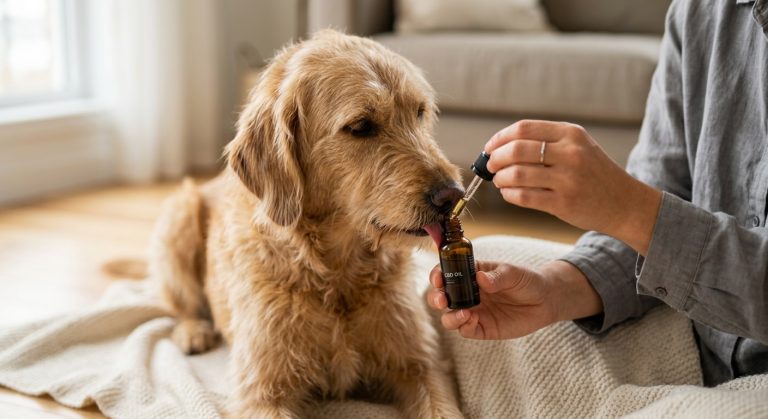
CBD — Hemp-derived CBD has the strongest evidence for pain and inflammation among complementary options, with Cornell University studies showing meaningful reduction in arthritis pain scores. It works best alongside conventional treatment rather than as a replacement. Our guide to the best CBD oil for dogs covers what the research supports and how to choose a quality product.
Orthopedic bedding — Pressure relief from a quality orthopedic bed materially reduces joint discomfort during rest — the time when many dogs are stifffest. Our guide to the best orthopedic dog beds for senior dogs covers the specs that matter.
Dental treatment — If you suspect dental pain, a professional cleaning under anesthesia is the appropriate intervention. No supplement or chew resolves established dental disease.
Pet insurance — Pain management for a senior dog with arthritis, dental disease, or injury can become a significant ongoing cost. Our best pet insurance guide covers which plans cover chronic conditions and what to look for before a diagnosis makes coverage harder to obtain.
Before the FAQ: Related Reading
The signs in this article most commonly point toward joint pain in senior dogs, dental disease, and injury — the three most prevalent sources of chronic pain in dogs. Our guide to the best dog joint supplements for senior dogs covers evidence-based support for joint pain, including the difference between basic glucosamine and the Dasuquin/Cosequin pharmaceutical tier. For owners managing a senior dog’s comfort across multiple fronts, our best orthopedic dog beds guide covers how sleeping surface affects joint recovery. And if your dog’s pain signs suggest a vet conversation but a clinic visit isn’t possible today, Dutch offers same-day telehealth consultations with licensed vets who can assess symptoms and prescribe medication where appropriate.
FAQ
Q: My dog doesn’t cry or yelp. Does that mean they’re not in pain? No — it’s one of the most common misconceptions. Most dogs with chronic pain never vocalize. The signs are behavioral and physical, not auditory. Stoicism is the rule, not the exception.
Q: Can I give my dog ibuprofen or aspirin for pain? Never give your dog ibuprofen (Advil, Motrin) or naproxen (Aleve). Both are toxic to dogs and cause severe gastrointestinal ulceration and kidney damage. Aspirin is less acutely dangerous but still not recommended — it interferes with blood clotting and damages the GI tract. Acetaminophen (Tylenol) is toxic to both dogs and cats. Only use veterinary-approved NSAIDs under vet guidance.
Q: How do I know if my senior dog’s slowness is arthritis or just aging? Aging doesn’t hurt. Arthritis does. If your dog is moving more slowly, struggling with stairs, or hesitating before jumping, that’s not an inevitable consequence of age — it’s a symptom of a treatable (or at least manageable) condition. Get a vet opinion.
Q: What’s the fastest way to get a vet’s opinion without going to a clinic? Veterinary telehealth services like Dutch offer same-day video appointments with licensed vets. They can assess symptoms, create a treatment plan, and in most states prescribe medication including pain management. At $11/month for unlimited consultations, it’s practical for ongoing senior dog management.
Q: My dog seemed fine yesterday and is limping today. How long should I wait? A sudden onset limp without a known injury warrants a vet call same day or next day — especially in senior dogs, where it can indicate a fracture, ligament tear, or acute joint episode. A mild limp that improves over 24 hours with rest can be monitored. Any limp that persists more than 48 hours or worsens should be evaluated.
Q: Can pain cause a dog to become aggressive? Yes — pain-related aggression is well-documented and frequently misdiagnosed as behavioral problems. A dog that suddenly snaps or growls when touched, or becomes generally irritable, should be evaluated for pain before any behavioral intervention. Addressing the pain often resolves the aggression entirely.