Best Dog Leashes in 2026: The Right Leash for Every Dog and Situation
PetGearPal is reader-supported. If you buy through links on this page, we may earn a commission at no extra cost to you. As an Amazon Associate, we earn from qualifying purchases.
Last updated: September 2026 | ~1,950 words
The Leash Is the Most Used Piece of Dog Gear You Own — Most People Don’t Think About It
Collars get swapped. Harnesses get upgraded. Leashes get replaced when they break and bought on impulse at the checkout counter. The result: most dogs are walked on whatever leash came with a set, or whatever was cheapest, regardless of whether it suits the dog or the owner.
A leash that doesn’t fit the situation makes walks harder. A reactive dog on a flexi-lead is a liability. A large breed on a thin rope leash that cuts into your palm is a daily discomfort. A puppy on a 6-foot standard leash when you’re doing recall training in a park needs a longer line.
This guide covers what actually matters in a leash, matched to different dogs, situations, and training stages.
Types of Dog Leashes
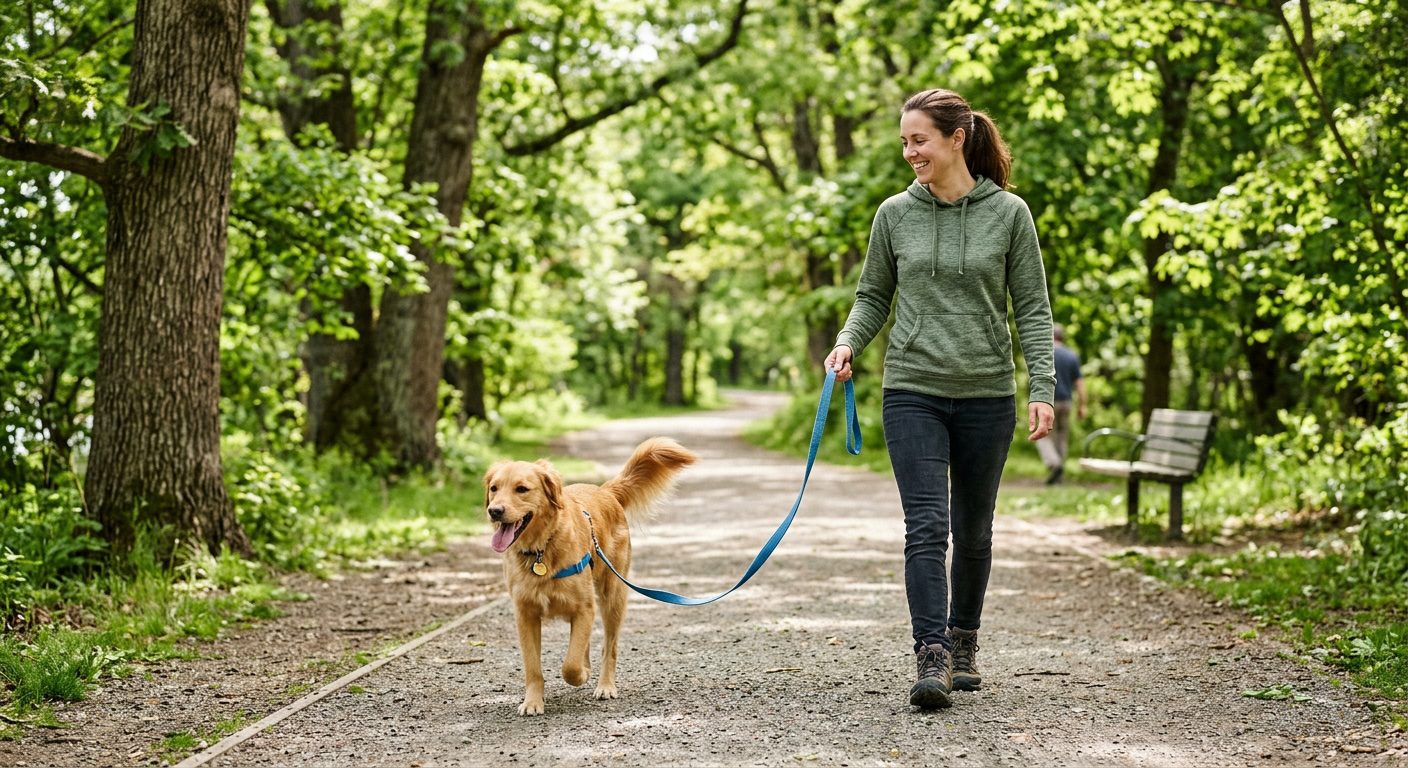
Standard flat leash (4–6 feet): The default for most situations. Nylon, leather, or biothane. Adequate for well-trained dogs, training walks, and general daily use. The right baseline for nearly every dog.
Retractable (flexi) leash: Extends 16–26 feet via a spring-loaded mechanism. Widely popular, genuinely problematic. Retractable leashes teach dogs that pulling extends their range, they provide essentially zero control in reactive situations, the thin cord causes rope burns and lacerations, and the plastic housing can be pulled from your hand by a sudden lunge. The AVMA and many trainers recommend against them. If your dog is truly reliable and you’re in an open, safe area, the risk is lower — but for most dogs and most situations, a long line is safer and does everything a flexi does better.
Long line (15–50 feet): A standard flat leash in a much longer format. Used for recall training, allowing freedom in open spaces while maintaining a safety tether. Should not be used in tight or busy areas — too much line creates entanglement hazards. Essential for recall training.
Traffic leash (12–18 inches): An extremely short leash for situations requiring maximum control — busy crossings, vet waiting rooms, reactive dog management near triggers. Often used as a second attachment point on a dual-clip harness.
Slip lead: A single-loop design where the leash forms both the collar and lead. Standard in veterinary settings for quick handling. Can tighten on the throat if the dog pulls — not appropriate for daily walking with a puller. Useful for quick leash-ons and off-lead recall training setups.
Hands-free/running leash: Attaches around the waist. Useful for running and hiking with dogs who don’t pull dangerously. Not appropriate for reactive dogs or situations where sudden stops are needed.
What to Look for in a Standard Leash
Material:
- Nylon: Most common, affordable, durable, easy to clean. Can cause friction burns if the leash runs through your hand. Adequate for most dogs.
- Biothane: Waterproof, easy to clean, soft on hands, doesn’t absorb odour. More expensive than nylon but significantly more comfortable for owners. Worth the upgrade for daily use.
- Leather: Premium option that softens with use and is comfortable in hand. More maintenance, not waterproof, expensive. Best for calm adult dogs in dry climates.
- Rope/cotton: Soft but absorbs water and dirt, wears faster than nylon or biothane.
Width: Should match the dog’s size. Thin (half-inch) leashes for small breeds; 1-inch width for medium-large dogs. Thicker leashes are more comfortable in hand and more durable.
Handle: Padded handles reduce fatigue significantly for daily walkers. Look for handles that are comfortable when the leash is held at different tensions — a dog who pulls occasionally vs. one who pulls constantly will highlight the difference.
Hardware: Bolt snaps are the most common and reliable. Avoid trigger snaps on dogs over 30 lbs — they can open under sudden stress. Look for stainless steel or solid brass hardware; cheap zinc alloy corrodes and weakens.
Comparison Table: Best Dog Leashes (2026)
| Leash | Best For | Material | Length | Price |
|---|---|---|---|---|
| Ruffwear Knot-a-Leash | Active dogs, hiking, daily use | Biothane-coated | 5 ft | ~$35–40 |
| Mendota Products Snap Leash | Training, everyday quality | Rope | 4–6 ft | ~$20–30 |
| PetSafe Nylon Leash | Budget everyday | Nylon | 4–6 ft | ~$10–15 |
| Gooby Escape Free Leash | Small dogs, extra security | Nylon | 4–6 ft | ~$12–18 |
| Biothane Long Line | Recall training, open spaces | Biothane | 15–50 ft | ~$25–50 |
Our Top Picks
🥇 1. Ruffwear Knot-a-Leash — Best Overall
View on Amazon → (4.7★ · 5,000+ reviews)
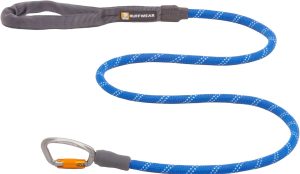
Ruffwear’s Knot-a-Leash earns its position through the combination of material quality and thoughtful design. The biothane-coated rope is waterproof, soft in the hand, and doesn’t absorb mud or odour the way nylon does — a practical advantage for owners who walk in all weather or near water. The clip is a locking gate carabiner-style rather than a standard bolt snap, significantly reducing the risk of accidental release during a lunge.
The traffic handle midway down the leash (in addition to the standard end handle) gives you a short-leash grip point for reactive moments or busy crossings without needing a separate traffic leash. It’s one of those features that seems minor until you actually need it.
Best for: Active owners, dogs who swim or play in mud, reactive dogs who need frequent traffic-handle use, anyone who walks in all weather
🥈 2. Mendota Products Snap Leash — Best for Training
View on Amazon → (4.7★ · 8,000+ reviews)

Mendota makes the leash that professional trainers default to: braided rope construction that’s soft in the hand, a reliable bolt snap, and a quality that holds up to daily professional use. It’s the leash equivalent of the Safari nail clipper or the Resco dog nail trimmer — the tool that the people who use this gear all day choose, at a price that makes replacing it when it eventually wears out painless.
Available in multiple lengths and widths for different dog sizes. The rope construction is more comfortable than flat nylon during long sessions where the leash runs through your hand repeatedly.
Best for: Training-focused owners, professional handlers, anyone who wants a simple, high-quality everyday leash without premium features
🥉 3. PetSafe 6-Foot Nylon Leash — Best Budget
View on Amazon → (4.6★ · 20,000+ reviews)
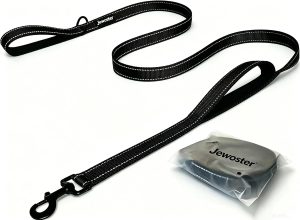
The honest budget recommendation. PetSafe’s nylon leashes are well-constructed for the price, come in multiple widths and colours, and hold up to daily use. The hardware is adequate (not premium), the nylon is comfortable enough for most owners, and the price point means replacing it when it eventually wears out isn’t a significant decision.
Best for: Owners who want a functional daily leash at minimal cost, secondary leashes, puppies who may chew through their first leash
4. Biothane Long Line — Best for Training Recall
View on Amazon → (4.6★ · 3,000+ reviews)

A biothane long line (30 feet) for recall training and allowing freedom in open spaces. Biothane is the right material for long lines — it doesn’t tangle as badly as rope, doesn’t absorb water or mud, and is easy to wipe clean. Essential for anyone working on recall with a dog who isn’t yet fully reliable off-lead.
How to use it: Let the long line trail on the ground in a safe open area. Don’t hold it coiled — let the dog drag it. Call the dog, reinforce recall heavily, use the line only as a safety backup if needed. Never use a long line near roads, other dogs, or in tight spaces.
Best for: Recall training, sighthound owners who want a safety tether in open spaces, anyone working toward reliable off-lead behaviour
Leash Selection by Dog Type
Puppy: A standard 4–6 foot nylon or rope leash to start. Don’t bother with anything expensive yet — puppies chew, pull erratically, and grow. Once basic leash manners are established, upgrade.
Reactive dog: Maximum control requires a short, secure leash with reliable hardware. The Ruffwear’s traffic handle is particularly useful. Pair with a front-clip harness — our guide to the best no-pull dog harnesses covers the options. Avoid retractable leashes entirely.
Small dog: Width matters — a half-inch leash is more appropriate than a 1-inch leash for toy breeds. Our guide to the best dog harnesses for small dogs covers the harness side of the equation.
Dog in training for recall: A long line is essential. Get a biothane one — rope long lines tangle constantly.
Active/outdoor dog: The Ruffwear or biothane-construction leash handles mud, water, and wear better than standard nylon.
About Retractable Leashes
Worth addressing directly: retractable leashes are among the best-selling dog products on the market and among the most problematic. The issues are real and worth knowing:
- The mechanism teaches dogs that pulling = more space, reinforcing the exact behaviour most owners are trying to reduce
- They provide essentially no control in a reactive situation — the locking mechanism is too slow and the cord too thin
- The thin cord causes serious lacerations to human hands and legs when it wraps around a limb at speed
- The housing is frequently pulled from owners’ hands by larger dogs lunging suddenly
If you currently use one, it’s worth considering a standard long line for situations where you want to give your dog more range — it does everything a retractable does with significantly more control and safety.
Before the FAQ: Related Reading
A leash is one half of the walking equation — the harness is the other. Our guide to the best no-pull dog harnesses covers the front-clip options that make walks with pullers manageable, and our guide to the best dog harnesses for small dogs covers the small-breed-specific options. For puppies working on leash manners, our crate training guide and puppy training guide cover the foundational skills that make walks easier.
FAQ
Q: What length leash should I use? 4 feet for busy urban environments where you need dogs close; 6 feet for standard walks; longer lines for training and open spaces. Most everyday walking is best with a 6-foot leash.
Q: Is leather better than nylon? For comfort in hand: yes. For durability across all conditions: no — leather requires maintenance and performs poorly when wet. Biothane gives you the hand-comfort of leather with the durability of synthetic materials and is waterproof. Worth considering as a leather alternative.
Q: My dog chews through leashes. What do I do? First, address the chewing behaviour — a dog who chews through leashes while being walked needs management and training attention, not a tougher leash. In the meantime, wire-reinforced leads exist but are stopgaps. Cable leashes are technically chew-resistant but are uncomfortable to handle and hard on dogs if they lunge.
Q: Do I need a different leash for different situations? Having two leashes — a standard everyday leash and a long line — covers the vast majority of situations. A traffic leash as a third option is useful for reactive dogs.