Best Dog Food for Weight Loss in 2026: What Actually Helps Overweight Dogs Slim Down
PetGearPal is reader-supported. If you buy through links on this page, we may earn a commission at no extra cost to you. As an Amazon Associate, we earn from qualifying purchases.
If your vet has mentioned that your dog could stand to lose a few pounds, you’re not alone. Studies estimate that over 50% of dogs in the U.S. are overweight or obese — and most owners don’t realize it until a vet brings it up. The good news: the right food makes a significant difference, and weight loss in dogs is more straightforward than most people expect.
This guide covers the best dog food for weight loss in 2026, how to know if your dog is actually overweight, and what to do beyond just switching foods.
Is My Dog Actually Overweight?
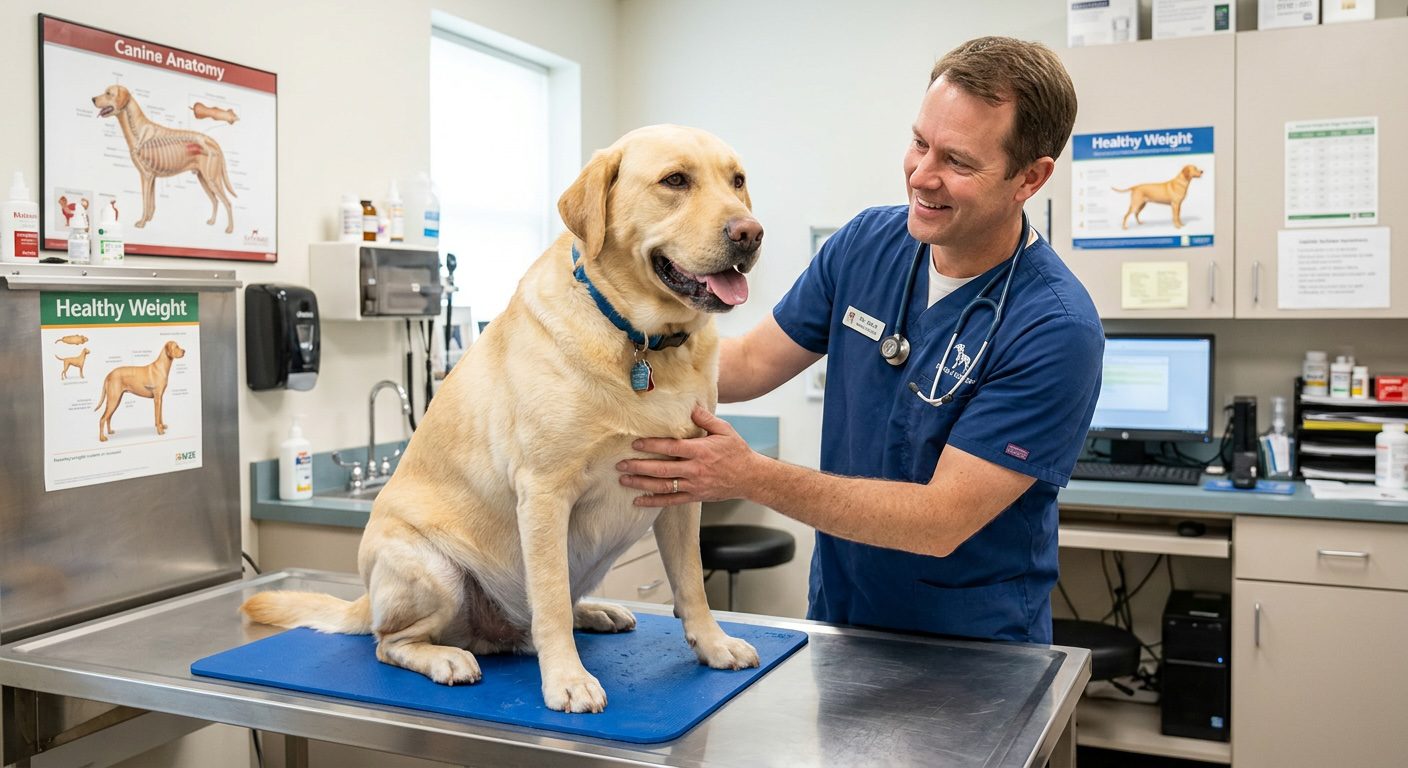
Before changing your dog’s diet, confirm there’s actually a weight problem. The Body Condition Score (BCS) is the standard tool vets use — it’s a 9-point scale where 4–5 is ideal.
At-home BCS check:
- Ribs: Run your hands along your dog’s sides. You should feel ribs easily without pressing hard, but not see them prominently. If you have to press to find them, your dog is likely overweight.
- Waist: Looking down from above, you should see a visible waist behind the ribs. No tuck = likely overweight.
- Abdomen: From the side, your dog’s belly should tuck up slightly, not hang level or sag.
A score of 6–7 means moderately overweight; 8–9 is obese. If you’re unsure, your vet (or a telehealth vet through Dutch) can give you an exact BCS and help set a target weight.
What Makes a Dog Food Good for Weight Loss?
Not all “weight management” or “light” formulas are created equal. Here’s what actually matters:
- High protein, lower fat — Protein preserves muscle mass during weight loss while fat is the primary calorie source to reduce. Look for 25%+ protein (dry matter basis) and lower fat relative to the breed’s needs.
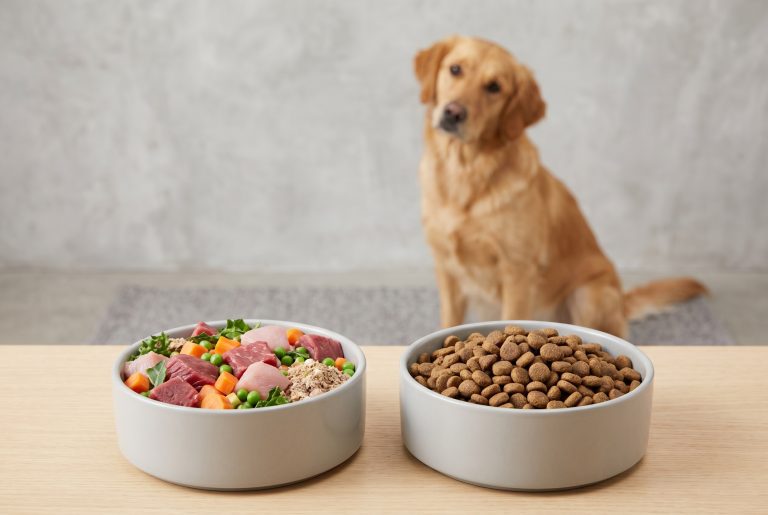
- High moisture content — Foods with more water (fresh, raw, wet) make dogs feel fuller on fewer calories. This is a major advantage of fresh and raw over dry kibble for weight loss.
- Real fiber sources — Ingredients like sweet potato, pumpkin, and green beans add bulk and satiety without adding significant calories.
- No filler carbohydrates — Corn, white rice, and wheat as primary ingredients contribute calories without much nutritional payoff. Look for these lower on the ingredient list.
- AAFCO complete and balanced — Even a weight-loss diet must meet your dog’s full nutritional needs. Never put a dog on a severely restricted diet without vet guidance.
Best Dog Food for Weight Loss: Our Top Picks
🥇 Pick #1: We Feed Raw (Best Overall for Weight Loss)
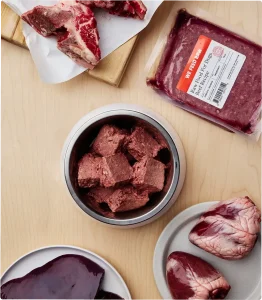
We Feed Raw is our top pick for overweight dogs, and here’s the counterintuitive reason: raw food is naturally high in moisture, which means dogs feel satisfied eating less. The protein-to-fat ratio in a properly balanced raw diet closely mirrors what dogs evolved to eat — lean muscle meat, organ, and bone — without the excess carbohydrates that contribute to weight gain in many commercial kibbles.
We Feed Raw offers portion-controlled, pre-measured meals calibrated to your dog’s target weight, not their current weight — which is exactly the right approach. You tell them your dog’s target weight and they calculate portions accordingly. No guesswork.
Single-protein options (beef, chicken, turkey, duck) make it easy to identify and eliminate any protein your dog doesn’t tolerate well, which is a bonus for dogs whose weight issues are complicated by food sensitivities.
Why it works for weight loss: High moisture = satiety. High protein = muscle preservation. Low carbs = fewer empty calories.
Ideal for: Dogs at BCS 6–8 whose owners want the most effective dietary intervention, not just a “light” label.
🥈 Pick #2: Open Farm Homestead Turkey & Chicken Recipe (Best Clean Kibble)
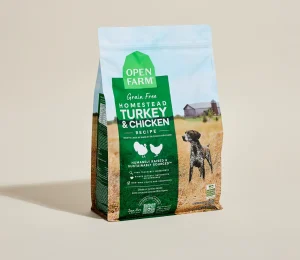
If raw isn’t feasible, Open Farm produces one of the cleanest dry kibbles on the market. Their Homestead Turkey & Chicken formula is lower in fat than many standard formulas while keeping protein high — a good balance for weight management without going to a specialty “weight loss” formula.
Open Farm’s “Gently Cooked” line is worth considering as a step up: it’s higher in moisture than dry kibble, which improves satiety, and the ingredient quality is exceptional. Mixing a small amount of gently cooked with reduced-portion dry is a practical middle ground for budget-conscious owners who still want better results than kibble alone.
Why it works: Clean ingredients, no filler carbs, higher moisture in the cooked line, honest portions on the packaging.
Ideal for: Owners who want premium quality without full raw commitment, or as a step up from grocery-store kibble.
🥉 Pick #3: Brothers Complete Turkey & Egg Advanced Allergy Care (Best for Sensitive Dogs)

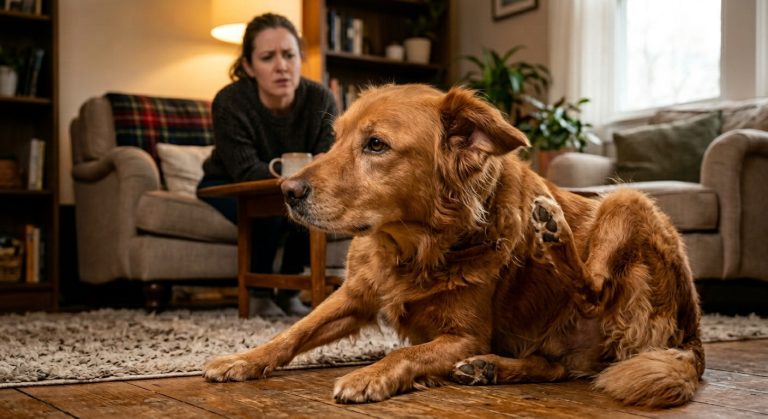
Many dogs gain weight partly because chronic low-grade food sensitivities cause inflammation and metabolic disruption. If your dog has a history of itching, loose stools, or ear infections alongside their weight issue (see our best dog food for allergies guide), addressing the underlying sensitivity often accelerates weight loss.
Brothers Complete Turkey & Egg is a single-protein, grain-free formula with digestive enzymes that genuinely helps dogs with sensitive systems absorb nutrients more efficiently. Better digestion = better metabolism = easier weight management.
Why it works: Removes common allergens that may be causing systemic inflammation, digestive enzymes improve nutrient absorption, clean single-protein formula.
Ideal for: Overweight dogs who also have skin issues, GI problems, or a history of food sensitivities.
Pick #4: Hill’s Prescription Diet Metabolic (Best Vet-Supervised Option)
Requires a vet prescription — ask your vet or consult via Dutch telehealth →
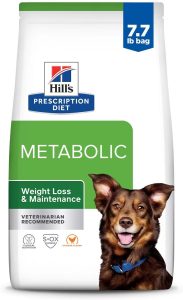
For dogs that are clinically obese (BCS 8–9) or have failed to lose weight on standard reduced-calorie feeding, Hill’s Prescription Diet Metabolic is the gold standard among vet-prescribed weight loss foods. It uses a proprietary blend of fiber and protein designed to alter metabolism and reduce appetite.
This requires a vet prescription, which means it’s paired with professional monitoring — the right approach for serious cases. Ask your vet about it at your next visit, or discuss it via Dutch if you want a telehealth option.
Ideal for: Dogs that are clinically obese, or whose weight hasn’t budged after 8+ weeks of portion control on standard food.
Pick #5: Purina Pro Plan Weight Management (Best Accessible Kibble)
(4.6★ · 3,588 reviews) View on Amazon →

For owners who need a widely available, affordable option, Purina Pro Plan Weight Management (formerly called “FOCUS Healthy Weight”) is the most research-backed mainstream option. It uses a high-protein, reduced-fat formula with real chicken as the first ingredient.
Available on Amazon with Subscribe & Save. Not the cleanest ingredient panel, but the feeding trial research behind Pro Plan’s weight management formulas is stronger than most competitors.
Ideal for: Budget-conscious owners who want a vet-recommended option from a large retailer.
Beyond the Food: What Actually Makes Dogs Lose Weight
Diet is the primary lever — exercise alone rarely produces meaningful weight loss in dogs, just as in humans. But the combination is what works best.
Portion Control Is Non-Negotiable
The single biggest mistake overweight dog owners make is eyeballing portions. Most people overfeed by 20–30% just from imprecise scooping.
- Use a kitchen scale (not a measuring cup) for dry food — a packed vs. loose cup is a 20%+ difference
- Feed to your dog’s target weight, not their current weight — see how much to feed your dog
- Treats count — keep them under 10% of daily caloric intake and reduce the meal portion to compensate
Treat Substitutes That Won’t Wreck Progress
Many owners don’t want to cut treats entirely because they use them for training. Low-calorie alternatives that dogs love:
- Baby carrots (5 calories each)
- Green beans (plain, frozen or fresh)
- Cucumber slices
- Plain rice cakes broken into tiny pieces
- A portion of their daily kibble ration used as training treats
Exercise: What Actually Helps
Exercise supports weight loss but doesn’t replace calorie reduction. Realistic targets:
- 20 lb dog: 30 minutes walking daily, plus playtime
- 50 lb dog: 45–60 minutes walking daily
- Large breed: 60+ minutes, ideally split into two walks
Swimming is especially effective for overweight dogs with joint pain — it burns calories without joint stress. For dogs with significant orthopedic issues, consult a vet before increasing exercise intensity.
How Fast Should a Dog Lose Weight?
A safe, healthy rate is 1–2% of body weight per week. For a 50-lb dog, that’s 0.5–1 lb per week. Faster than that risks muscle loss and nutritional deficiencies.
Most dogs reach their target weight in 3–6 months. If progress stalls after 6 weeks of strict compliance, a vet visit (or Dutch telehealth consultation) is worth it — some dogs have underlying thyroid or hormonal issues that make weight loss difficult.
Weight Management FAQ
My dog seems hungry all the time on a diet. What can I do? Switch to a higher-moisture food (fresh or raw) — dogs feel significantly fuller on fewer calories when moisture is high. You can also add plain canned pumpkin (not pie filling) to their meals: 1–2 tablespoons adds fiber and bulk with very few calories.
Can I just feed my dog less of their current food? Yes, and it’s often the first step. Reduce by 20% and reassess after 4 weeks. If the current food is high in filler carbohydrates, switching to a better formula while reducing portions will produce faster results.
What about weight management dog food vs. regular food with smaller portions? Specialty weight management foods often use higher fiber to create satiety at lower calorie intake. Whether that’s better than just feeding less of a high-quality food depends on the dog. For most dogs, feeding less of a quality protein-forward food (like We Feed Raw or Open Farm) — see our best fresh dog food guide outperforms a “light” label on a mediocre kibble.
Are grain-free foods better for weight loss? Not inherently. What matters is the overall macro profile (protein, fat, carbohydrates) and ingredient quality, not whether grains are present. Some grain-free foods are actually higher in carbohydrates (from potatoes and legumes) than grain-inclusive alternatives.
My dog has arthritis and can’t exercise much. Can they still lose weight? Yes — and weight loss will likely reduce their joint pain significantly. Every pound lost reduces approximately 4 lbs of force on joints. Diet is your primary tool; keep exercise gentle (leash walks, swimming if available) and increase as joint comfort improves.
How do I know if my dog’s weight is causing health problems? Signs that excess weight is actively causing problems include: difficulty breathing after mild exertion, reluctance to go up/down stairs, visible lameness, or reduced energy and playfulness. All of these warrant a vet visit.
Related reading: Best Dog Food for Senior Dogs 2026 | We Feed Raw Review | Best Dog Joint Supplements for Senior Dogs | How Much Should I Feed My Dog? | Open Farm Dog Food Review