How to Socialize a Dog: The Complete Guide for Puppies and Adults
PetGearPal is reader-supported. If you buy through links on this page, we may earn a commission at no extra cost to you. As an Amazon Associate, we earn from qualifying purchases.
Knowing how to socialize a dog is one of the most impactful things you can do for their long-term quality of life — and one of the most misunderstood. Done right, it produces a dog that’s calm, confident, and adaptable in new situations. Done wrong (or skipped entirely), it’s a primary driver of fear, reactivity, and aggression later in life.
This guide covers how to socialize a dog at every life stage — puppy or adult — what the research actually says about timing, and the common mistakes that make things worse.
What Dog Socialization Actually Is (And Isn’t)
Socialization isn’t about making your dog “friendly” or forcing them to interact with strangers. It’s about exposing your dog to the full range of things they’ll encounter in their life — people, animals, environments, sounds, surfaces, and objects — so those things feel normal and non-threatening.
A well-socialized dog doesn’t have to love every person or dog they meet. They just need to be able to encounter them without fear, panic, or aggression.
What socialization is not:
- Taking your dog to the dog park and letting them “figure it out”
- Flooding — exposing a dog to something scary and waiting for them to “get over it”
- Forcing interactions your dog is actively avoiding
- Assuming a friendly puppy will stay friendly without ongoing exposure
The Critical Socialization Window (Puppies)
For puppies, the science is clear: the primary socialization window is roughly 3–14 weeks of age. During this period, the puppy brain is uniquely primed to accept new experiences as normal with relatively little fear response. After 14–16 weeks, the fear response increases and novel things require more work to accept.
This doesn’t mean socialization is impossible after 16 weeks — adult dogs can and do make significant progress. But the window matters, and missing it makes the job harder.
What this means practically:
- Most puppies arrive home at 8 weeks — you have roughly 6 weeks in the prime window
- Every day of that window is genuinely valuable
- A responsible breeder will have started socialization work before the puppy leaves (handling, sounds, surfaces, visitors) — ask about this when selecting a puppy
Before Full Vaccination: What’s Safe?
The traditional advice to “wait until fully vaccinated” before socialization kept many puppies indoors until 16+ weeks — right past the end of the critical window. The American Veterinary Society of Animal Behavior (AVSAB) now recommends starting puppy socialization classes and controlled outings before the vaccine series is complete, as long as basic precautions are followed:
- Avoid dog parks, pet store floors, and areas frequented by unknown dogs until fully vaccinated
- Carry your puppy in high-risk areas (city sidewalks, vet waiting rooms)
- Puppy classes in clean, vaccinated-only environments are low-risk and high-value
- Homes with vaccinated, healthy dogs are generally safe for playdates
The behavioral risk of poor socialization outweighs the disease risk of controlled, appropriate exposure. Talk to your vet about the right balance for your area.
How to Socialize a Puppy: Step-by-Step
Week 1–2 Home (Ages 8–10 Weeks): Foundation
Focus on positive, low-pressure exposure rather than quantity. Every experience should end with the puppy calm or mildly curious, not overwhelmed.
Priority exposures:
- Different types of people: men, women, children, people in hats/sunglasses/uniforms, people with beards, people using canes or wheelchairs
- Handling: ears, paws, mouth, tail — done gently, paired with treats. This is critical for future grooming and vet visits.
- Household sounds: vacuum, dishwasher, TV, doorbell, stairs
- Different surfaces: tile, carpet, grass, gravel, wood floors, metal grates
- Car rides (short, positive ones)
- Being alone briefly — prevents future separation anxiety
The golden rule: Let the puppy choose the pace. If they approach and investigate, reward. If they back away from something, don’t push — give them space and try again later at a lower intensity.
Week 3–4 Home (Ages 10–12 Weeks): Expand Exposure
Add:
- Puppy class (find one that uses positive reinforcement, not corrections) — pair with high-value training treats
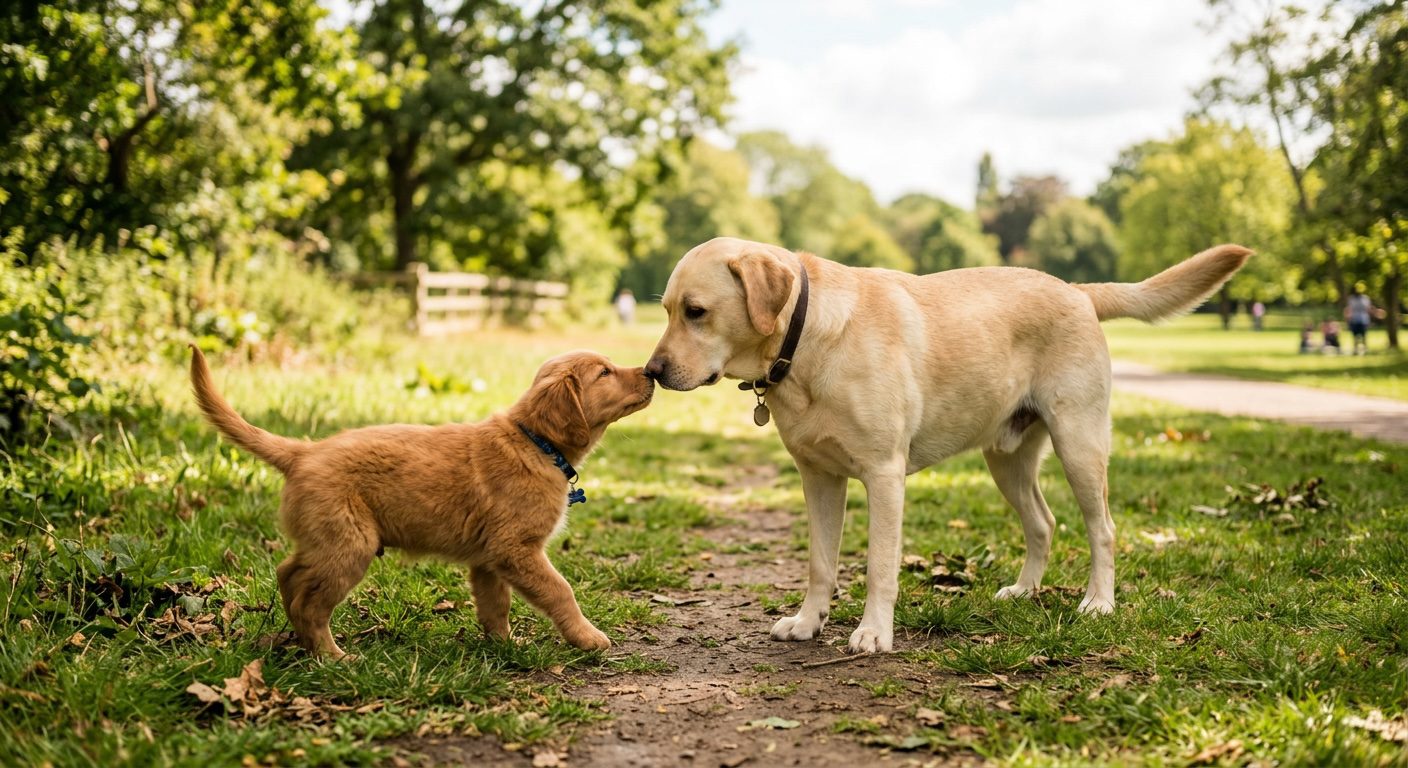
- Controlled meetings with calm, vaccinated adult dogs
- New environments: pet-friendly stores, outdoor patios, parking lots
- Bicycles, skateboards, strollers — watch from a distance first
- Children playing, running, making noise (from safe distance)
- Vet office visits just for treats — not procedures. Called “happy visits,” these prevent the vet = bad association.
Week 5–6 Home (Ages 12–14 Weeks): Consolidate
By this point, exposure breadth matters more than depth. Aim for variety:
- At least 5 new environments
- At least 5 different types of people
- At least 3 other dogs (in controlled settings)
- Loud public events (from a comfortable distance) — outdoor markets, sports events, parades
How to Socialize an Adult Dog
If you’ve adopted an adult dog, or socialization was missed or limited in puppyhood, don’t give up — adult dogs can make real progress. It just requires more time, more patience, and realistic expectations.
The key difference with adult dogs: you’re working against an established fear response, not preventing one from forming. This means going slower and being more thoughtful about not pushing past the dog’s threshold.
Step 1: Establish a Baseline
Before you can socialize, you need to understand what your dog is actually afraid of versus what they’re simply unfamiliar with. Spend the first 2–4 weeks just observing:
- What makes them freeze, hide, or try to flee?
- What makes them bark, growl, or lunge?
- Are there specific triggers (men, hats, children, dogs)?
- Do they recover quickly when the trigger passes, or stay stressed for hours?
This tells you where to start and how serious the fear is.
Step 2: Learn Your Dog’s Stress Signals
Most dogs give clear signals that they’re approaching or past their comfort limit — but owners often miss them:
Early stress signals (take these seriously):
- Lip licking or yawning when not tired
- Whale eye (showing whites of eyes)
- Ears pinned back
- Tail tucked low
- Refusing food (a dog that won’t eat treats is telling you they’re too stressed)
- Turning head or body away
Escalating signals:
- Stiffening body
- Hard stare at trigger
- Low growl
- Hackles up
Crisis point:
- Barking/lunging
- Snapping
- Fleeing or freezing
Your job is to work well below the escalating signals. If your dog is lunging, you’ve already gone too far — not just in that moment but in the session design.
Step 3: Counter-Conditioning and Desensitization (CC&D)
This is the core method for socializing fearful adult dogs, and it works. It has two components:
Desensitization: Exposing your dog to the trigger at such a low intensity that it doesn’t cause a fear response. Distance is your primary tool — a dog that barks at strangers 5 feet away will often be calm around strangers 50 feet away. Start there.
Counter-conditioning: Pairing the trigger with something excellent — high-value treats, play, whatever your dog loves most. The goal is to change the emotional association. Trigger appears → good things happen. Repeated consistently, this works.
Practical example — dog reactive to strangers:
- Find distance where dog notices stranger but doesn’t react (say, 30 feet)
- Every time stranger appears in view, feed high-value treats continuously
- When stranger leaves view, treats stop
- Over sessions, gradually decrease distance — only when dog is reliably relaxed at current distance
- Never go faster than the dog can handle without going over threshold
This process takes weeks to months, not days. Progress is real but not linear.
Step 4: Controlled Dog Introductions
For dogs that are reactive to or fearful of other dogs, structured introductions work better than “just letting them play”:
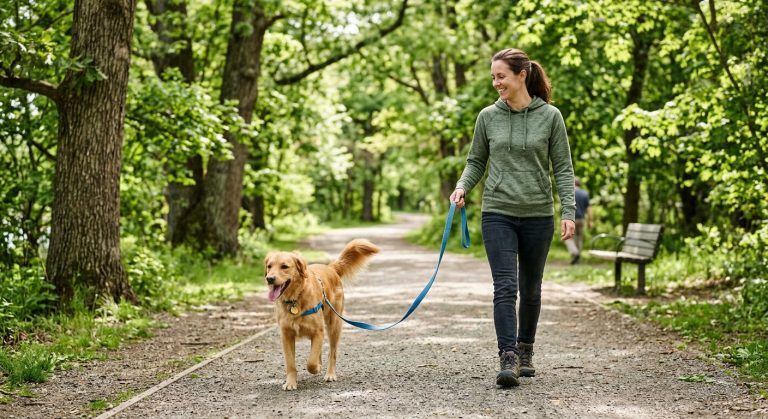
- Parallel walking is more effective than face-to-face meetings. Walk two dogs in the same direction, side by side with space between, let them glance at each other without direct engagement.
- No on-leash greetings with reactive dogs — leashes create tension and restrict natural body language.
- Avoid dog parks until confidence is established. The unpredictability of dog parks is overwhelming for under-socialized dogs.
- Choose calm, well-socialized demo dogs for initial meetings, not other excitable or reactive dogs.
When to Get Professional Help
If your dog’s fear or reactivity is severe — lunging, snapping, or significant fear that isn’t improving after 6–8 weeks of consistent work — a professional trainer or veterinary behaviorist makes a meaningful difference.
Look for trainers who use positive reinforcement methods only (no prong collars, e-collars, or “corrections” for fear responses — these make fear worse). Certifications to look for: CPDT-KA, IAABC, KPA-CTP.
Dutch also offers behavioral telehealth consults — a licensed veterinarian or veterinary behaviorist can assess your dog via video and, when appropriate, prescribe anti-anxiety medication to lower the dog’s baseline arousal during behavior modification. Medication isn’t a cure, but for severely anxious dogs it can make training possible when nothing else is getting through.

Common Dog Socialization Mistakes to Avoid
1. Flooding Putting a fearful dog in the scary situation and waiting for them to “get over it.” This doesn’t work — it usually makes fear worse and damages trust. Always start below threshold.
2. Forcing greetings “He just needs to sniff you.” If your dog is pulling away, hiding behind you, or showing stress signals, forcing the interaction reinforces that they can’t trust you to protect them.
3. Doing it once and calling it done Socialization is ongoing. A dog socialized well at 10 weeks but isolated from 6 months to 2 years will often become fearful again. Regular, varied positive exposure throughout a dog’s life maintains what was built.
4. Only using the dog park Dog parks are chaotic, unpredictable, and full of dogs with unknown histories. They’re fine for socially confident dogs. They’re actively harmful for under-socialized or reactive dogs.
5. Punishing fear responses A dog that growls is communicating. Punishing the growl doesn’t remove the fear — it removes the warning. Dogs that can’t growl often bite without warning. Growling is information; thank your dog for it and create more distance.
6. Skipping handling practice Many dogs that are fine in social situations become difficult at the groomer or vet because no one practiced touching their paws, ears, and mouth at home. Handle these areas daily from puppyhood, paired with treats.
Dog Socialization Checklist
Use this to track exposure — aim for the puppy window but work through it at any age:
People:
- [ ] Men with facial hair
- [ ] People in hats, hoods, sunglasses
- [ ] Children (toddlers, school-age, teens separately)
- [ ] People in uniforms (mail carriers, delivery drivers)
- [ ] People using mobility aids
- [ ] Groups of people
Animals:
- [ ] Calm adult dogs
- [ ] Small dogs
- [ ] Cats (if applicable)
- [ ] Livestock (if applicable)
Environments:
- [ ] Urban sidewalks
- [ ] Suburban neighborhoods
- [ ] Parks and trails
- [ ] Parking lots
- [ ] Pet-friendly stores
- [ ] Outdoor restaurant patios
Surfaces & Objects:
- [ ] Grates, manhole covers
- [ ] Slippery floors (tile, hardwood)
- [ ] Stairs
- [ ] Elevators
- [ ] Bicycles, skateboards
- [ ] Strollers, shopping carts
Sounds:
- [ ] Fireworks/thunder (recordings first, then distance)
- [ ] Traffic
- [ ] Construction
- [ ] Vacuum, appliances
Frequently Asked Questions
Is it too late to socialize my 1-year-old dog? No — adult dogs can make real progress, especially under age 3. It takes more time and patience than the puppy window, but CC&D is effective at any age. Start where you are.
My dog was socialized as a puppy but has become reactive. What happened? Common causes: a bad experience in adolescence (6–18 months) that wasn’t addressed, a period of isolation, or insufficient continued exposure. Adolescent dogs often go through a fear period around 6–10 months that can undo earlier socialization if handled poorly. Resume controlled positive exposures.
How long does it take to socialize a fearful adult dog? Mild cases: 4–12 weeks of consistent work. Moderate: 3–6 months. Severe cases with long histories: 6–18 months, sometimes with professional support and medication. Progress is real but slow. Celebrate small wins.
Can I socialize my dog at the dog park? Only if your dog is already socially confident. For fearful or reactive dogs, dog parks are too unpredictable and can set progress back significantly.
My dog only has issues with one thing (e.g., men). How do I fix this? This is often a specific under-exposure from puppyhood and responds well to targeted CC&D. Find men willing to participate, start at distance, use high-value food, be patient. Progress is usually faster with specific triggers than generalized anxiety.
Related reading: How to Train a Puppy: The First 8 Weeks at Home | How to Crate Train a Dog | How to Calm an Anxious Dog | How to Introduce a New Dog to Your Home | How to Stop a Dog From Barking