Best Dog Beds in 2026: What to Buy Based on Your Dog’s Size, Age, and Sleep Style
PetGearPal is reader-supported. If you buy through links on this page, we may earn a commission at no extra cost to you. As an Amazon Associate, we earn from qualifying purchases.
Last updated: August 2026 | ~2,050 words
A Dog Bed Is One of the Most Underrated Purchases You’ll Make
Most dog owners spend significant money on food, vet care, and gear — then buy whatever dog bed is on sale at the pet store. Dogs sleep 12–14 hours a day. The surface they sleep on matters to their joint health, their temperature regulation, and their ability to actually rest rather than just lie down.
This guide cuts through the enormous, confusing dog bed market to explain what actually matters and which beds are worth buying for different dogs and different situations.
What Actually Matters in a Dog Bed
Support: The single most important factor, particularly for dogs over 5 years old. A bed that compresses completely under the dog’s weight provides no orthopedic benefit. Look for memory foam or high-density foam that holds shape under pressure. Fiberfill and stuffed beds feel plush but offer minimal joint support.
Size: The bed should be large enough for the dog to fully stretch out in their preferred sleep position. Many dogs sleep curled — but a bed that only accommodates the curled position will be uncomfortable for a dog that stretches during the night. Err larger.
Washability: Dog beds get dirty. A bed with a removable, machine-washable cover is essential for practical use — beds that can’t be washed become hygiene problems quickly. Check that the cover actually comes off easily, not just in theory.
Waterproofing: For puppies, senior dogs with incontinence, or dogs who come in wet from outdoors, a waterproof liner between the cover and foam is a significant practical advantage. Without it, one accident ruins the foam core.
Bolsters vs. flat: Bolster beds (with raised edges) suit dogs who like to rest their head on something — common in sighthounds, spaniels, and dogs who curl against the couch. Flat mats suit sprawlers and dogs who run hot. Neither is inherently superior — it depends on the dog.
Temperature: Dogs overheat in certain beds. Cooling gel foam or raised cot-style beds help dogs who run warm (Boxers, Bulldogs, thick-coated breeds). Standard memory foam retains heat — fine for cold climates and cold-natured dogs, less so for heat-sensitive breeds.
Comparison Table: Best Dog Beds (2026)
| Bed | Best For | Type | Size Range | Price |
|---|---|---|---|---|
| Casper Dog Bed | Most dogs, quality everyday option | Foam, bolster | S–XL | ~$125–225 |
| Big Barker Orthopedic | Large breeds, joint-prone dogs | 7″ therapeutic foam | M–XL | ~$250–350 |
| Furhaven Cooling Gel | Hot-natured dogs, summer | Gel foam, flat | S–XXL | ~$30–80 |
| Bedsure Bolster | Budget, small-medium dogs | Fiberfill bolster | S–XL | ~$25–55 |
| Elevated Dog Cot (Coolaroo) | Outdoor use, hot climates, chewers | Mesh cot | S–XL | ~$35–90 |
Our Top Picks
🥇 1. Casper Dog Bed — Best Overall
View on Amazon → (4.6★ · 14,000+ reviews)

Casper’s dog bed applies the same thinking as their human mattress line to canine sleep: a supportive foam base with a pressure-relieving top layer, wrapped in a durable cover that comes off and goes in the washing machine. The result is one of the few dog beds that holds up over years rather than months.
The foam construction provides genuine orthopedic support — not the marketing kind where any bed with foam is called “orthopedic,” but actual resistance to compression that keeps joints supported through a full night. It’s not a therapeutic medical bed like the Big Barker, but it’s a significant step above the fiberfill market.
Cover removal is genuinely easy — a zipper that runs the full perimeter — and it’s machine-washable. The cover fabric is durable enough to resist normal scratching and digging without pilling or tearing quickly.
What we love:
- Foam construction that actually supports rather than compresses flat
- Genuinely easy-to-remove, machine-washable cover
- Available in multiple sizes to fit most breeds accurately
- Holds up to years of daily use — not a bed you’re replacing annually
Watch out for:
- Premium price relative to fiberfill alternatives
- Not the right choice for dogs with serious orthopedic conditions — see Big Barker for that
Best for: Most adult dogs, multi-dog households wanting one reliable option, owners who want quality without spending on a therapeutic-grade bed
🥈 2. Barker Beds Orthopedic Dog Bed — Best for Large Breeds and Joint Issues
View on Amazon → (4.7★ · 10,000+ reviews)
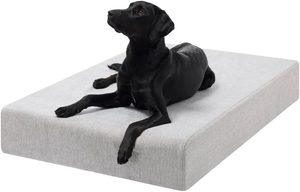
The Barker Beds is the only dog bed that backs its orthopedic claims with clinical research. A University of Pennsylvania veterinary study found measurable improvements in gait, mobility, and pain indicators in arthritic large-breed dogs who slept on Big Barker beds compared to control beds. That’s a meaningful distinction in a category full of marketing claims.
The 7-inch foam construction (compared to 3–4 inches in most “orthopedic” beds) genuinely doesn’t compress under a large dog’s weight. The cover is heavy-duty microfiber that resists moisture and is machine-washable. Big Barker offers a 10-year warranty and guarantees the foam won’t flatten — something no other dog bed offers.
It’s expensive, and it’s specifically designed for medium-to-large dogs. For a 10-lb Chihuahua, this is overkill. For a 90-lb Labrador with early arthritis or hip dysplasia, it’s one of the most evidence-backed investments you can make.
What we love:
- Clinically studied — actual veterinary research backing the joint health claims
- 7″ foam that genuinely doesn’t compress under large dog weight
- 10-year warranty with foam flatness guarantee
- Heavy-duty construction that lasts
Watch out for:
- Price is significant — justified for large dogs with joint issues, overkill for healthy small dogs
- Only makes sense for medium-to-large breeds (50 lbs+)
Best for: Large breeds with arthritis, hip dysplasia, or joint issues; senior large dogs; owners who want clinical evidence behind their purchase
🥉 3. Furhaven Orthopedic Bolster Bed — Best for Dogs Who Run Hot

View on Amazon → (4.5★ · 35,000+ reviews)
A dog who overheats on a standard foam bed will choose the cool tile floor over the bed every time. For brachycephalic breeds (Pugs, Bulldogs, French Bulldogs), thick-coated breeds, and dogs in warm climates, a cooling-gel or cooling-surface bed meaningfully changes whether the dog actually uses it.
Furhaven’s bolster design wraps the dog in padded support on three sides while the orthopedic foam base provides genuine joint support. The plush cover is machine-washable and the bolsters are removable for washing separately. Available at a price point that makes it genuinely accessible — and machine-washable cover.
What we love:
- Gel foam construction that actually keeps the surface cooler than memory foam
- Very accessible price point for the size options available
- Wide size range covering tiny breeds through large dogs
- Consistently high owner ratings for dogs who previously ignored their beds
Watch out for:
- Less durable than Casper or Big Barker for heavy use
- Thinner foam profile — better for younger dogs; seniors with significant joint issues may need more support
Best for: Brachycephalic breeds, dogs in warm climates, thick-coated breeds, dogs who refuse to use their current bed
4. Bedsure Orthopedic Bolster Bed — Best Budget Option
View on Amazon → (4.4★ · 30,000+ reviews)

The honest budget pick. Fiberfill construction won’t provide the orthopedic support of foam, but for healthy young dogs without joint concerns, it’s a comfortable, washable, well-priced option that works. Available in a wide size range. The bolster edges suit dogs who like to lean against something while sleeping. Replace every 1–2 years as the fill compresses.
Best for: Puppies and young healthy dogs, households where the dog doesn’t stay in one spot, owners who want a low-cost option they can replace without guilt
5. Coolaroo Elevated Dog Cot — Best for Outdoors and Hot Climates
View on Amazon → (4.4★ · 25,000+ reviews)

Elevated cots — mesh stretched over a frame — offer airflow from below as well as above, making them the coolest sleeping option available. They’re also extremely durable (no foam to compress, no cover to tear), practical outdoors, and easy to clean with a hose. Dogs with destructive chewing habits sometimes do better on cots than foam beds.
The trade-off: no cushioning beyond the mesh itself. Fine for healthy dogs; not appropriate for dogs with joint pain or significant arthritis who need padded support.
Best for: Outdoor use, hot climates, heavy chewers, dogs in warm garages or patios, as a secondary bed for outdoor areas
Matching the Bed to Your Dog
Puppy: Budget fiberfill or a washable mat. Puppies chew, have accidents, and grow — don’t spend heavily until they’re adults and you know their sleep style.
Healthy adult dog: Casper or Furhaven depending on whether they run hot. The jump from fiberfill to proper foam is significant for dogs who sleep 12+ hours daily.
Senior dog (7+ years, large breed): Big Barker if budget allows. Our guide to the best orthopedic dog beds for senior dogs covers the senior-specific options in more depth, including what to look for as joint conditions progress.
Large breed with diagnosed arthritis or hip dysplasia: Big Barker is the clinically supported choice. Pair it with our guide to the best dog joint supplements for a complete joint health approach.
Dog who runs hot or refuses to use current bed: Furhaven cooling gel or the Coolaroo cot.
Bolster vs. flat: Watch where your dog sleeps naturally. A dog who curls against the couch cushion wants a bolster. A dog who sprawls flat on the floor prefers a flat mat.
How to Get Your Dog to Actually Use Their Bed
A common frustration: you buy a quality bed, the dog ignores it and sleeps on the floor. Usually this is a temperature problem (the bed is warmer than the floor), a location problem (the bed is in a room the dog doesn’t spend time in), or a familiarity problem (the bed smells new and unfamiliar).
Temperature: If the dog prefers cool hard floors, switch to a cooling bed or elevated cot.
Location: Put the bed where the dog already gravitates — near your usual seating, in the bedroom, wherever they currently choose to rest. Move it later once the dog associates it with comfort.
Familiarity: Put an unwashed item of your clothing on the bed when first introducing it. Your scent makes the bed more appealing immediately.
Encouragement: Drop high-value treats on the bed and reward the dog for getting on it, without asking them to stay. Repeat until they’re going on voluntarily.
Before the FAQ: Related Reading
For older dogs specifically, our guide to the best orthopedic dog beds for senior dogs goes into more detail on the foam specifications and features that matter as dogs age. If joint pain is part of why you’re upgrading the bed, our guide to the best dog joint supplements covers the supplementation that works alongside good sleeping surface. And if you’re crate training and wondering about bedding inside the crate, our guide to crate training covers when and what to put inside for different stages of the process.
FAQ
Q: How often should I replace a dog bed? Fiberfill beds: every 1–2 years as fill compresses. Quality foam beds: 3–5 years for mid-range options, 5–10+ years for premium foam like Big Barker. Replace when the foam no longer springs back or the dog is avoiding the bed.
Q: Should I wash the entire bed or just the cover? Wash the cover regularly (every 2–4 weeks). Wash the foam insert only if it’s been soaked — foam can be squeezed and air-dried but shouldn’t go in a machine dryer. A waterproof liner between cover and foam prevents soaks from reaching the foam.
Q: My dog destroys every bed I buy. What do I do? First, rule out under-stimulation — destruction often increases when dogs are bored. Second, try a canvas-covered or tough nylon bed rather than plush fabric. Third, the Coolaroo elevated cot is hard to destroy and has no stuffing to pull out. If destruction continues, consult a trainer — it’s usually manageable behaviour.
Q: Is an orthopedic bed worth it for a young healthy dog? Somewhat. Quality foam is better for joint health than fiberfill regardless of age, and establishing good sleep surface habits early pays off as dogs age. But a Big Barker-level investment is more justified for dogs with existing joint issues than young healthy dogs.
Q: Can I use a human memory foam mattress topper for my dog? Some owners do this successfully. The main concerns are off-gassing from some foam types, the lack of a dog-appropriate waterproof cover, and the fact that it’s not sized for the dog’s actual sleeping area. A purpose-made dog bed is simpler and more practical.