Why Does My Dog Lick Their Paws? (Causes & When to Worry)
PetGearPal is reader-supported. If you buy through links on this page, we may earn a commission at no extra cost to you. As an Amazon Associate, we earn from qualifying purchases.
Last updated: June 2026 | ~1,900 words
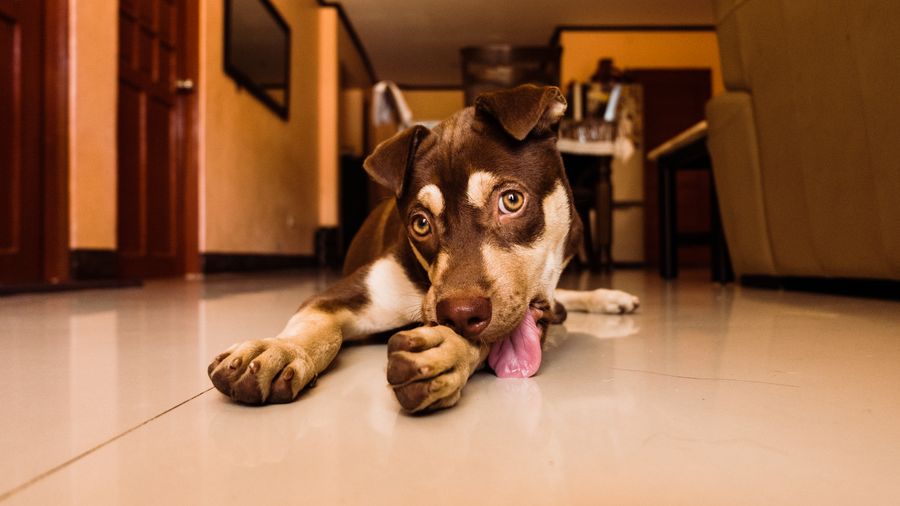
A little paw licking is normal grooming — frequent or intense licking is usually a sign of something else.
A Little Paw Licking Is Normal. A Lot Isn’t. Here’s How to Tell the Difference.
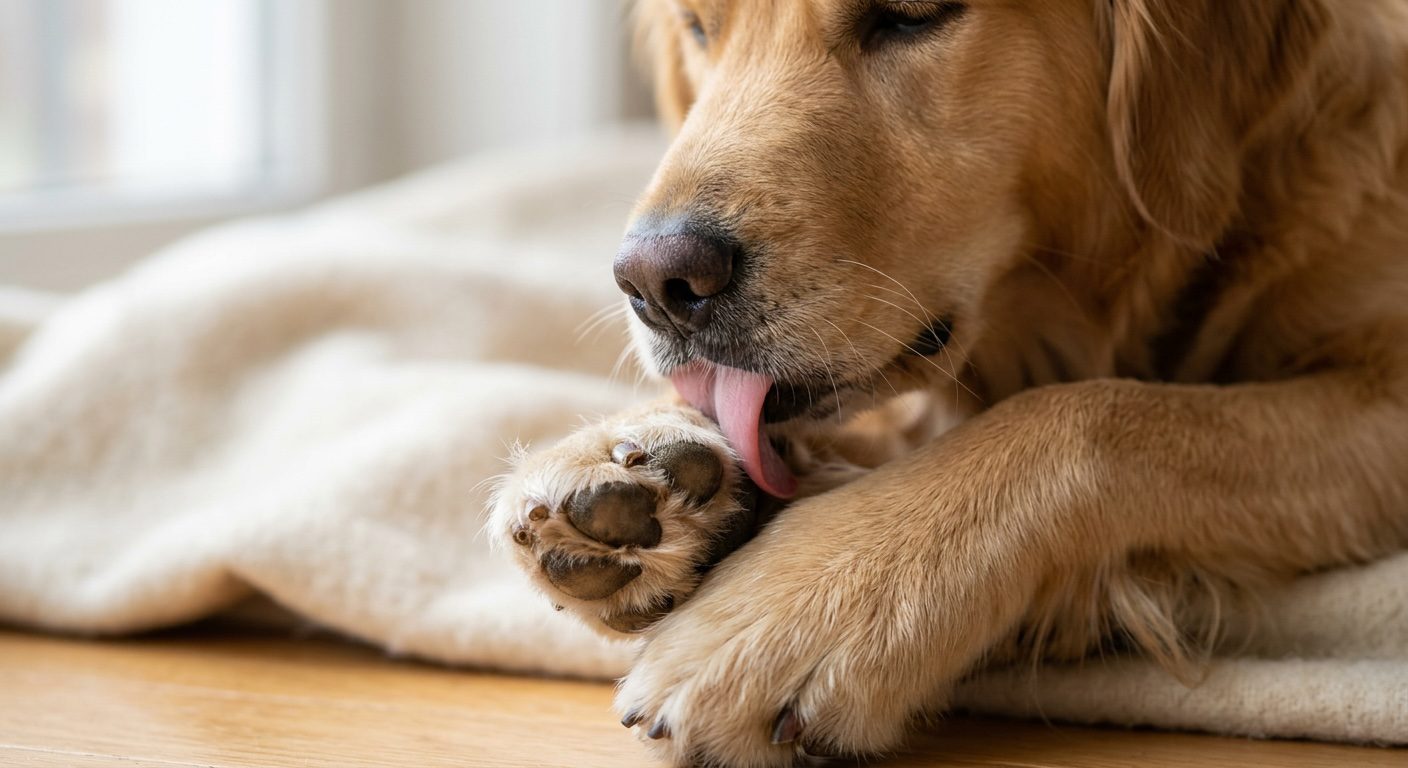
If you’re wondering why does my dog lick their paws, you’re not alone — it’s one of the most common dog behavior questions. Dogs lick their paws sometimes — it’s part of normal grooming, the same way cats groom themselves. But when paw licking becomes frequent, intense, or focused on one specific paw, it stops being grooming and starts being a symptom. The challenge for owners is telling the difference between “my dog is cleaning their feet” and “my dog is trying to communicate that something is wrong.”
This guide walks through the most common causes of excessive paw licking in dogs, how to tell them apart, and what to actually do about each one. By the end, you’ll have a clear answer to why does my dog lick their paws in your specific situation.
Quick gut check: If your dog is licking one specific paw intensely, especially with redness, swelling, or a smell, that’s a localized problem (injury, infection, foreign object). If they’re licking all four paws generally, it’s more likely allergies, anxiety, or environmental irritation. Either way, a telehealth vet consultation can help you figure out which without an in-person visit.
Is Paw Licking Normal?
Some paw licking is completely normal. Dogs clean themselves after walks, after eating something messy, or simply out of habit — similar to a person picking at their nails. Brief, occasional licking that doesn’t leave the paw red, raw, or stained isn’t something to worry about.
The signals that something has shifted from normal grooming to a problem:
- Licking lasts more than a few minutes at a time
- It happens multiple times per day, every day
- One specific paw is targeted disproportionately
- The fur is stained pink/brown from saliva (a telltale sign of chronic licking)
- The skin between the toes looks red, raw, or moist
- Your dog seems unable to stop, even when distracted
If you’re seeing any of these, it’s worth working through the causes below.
Why Does My Dog Lick Their Paws? 8 Common Causes
1. Environmental and Seasonal Allergies
This is the single most common cause of chronic paw licking in dogs. Pollen, grass, dust mites, and mold spores land on a dog’s paws every time they walk outside, and allergic dogs react to this contact exposure by licking. This is why paw licking often gets dramatically worse in spring and fall — allergy seasons.
Telltale signs: Worse during specific seasons, all four paws affected roughly equally, often accompanied by face rubbing, ear scratching, or skin irritation elsewhere on the body.
What helps: Wiping paws down after outdoor walks, especially during high-pollen periods. Omega-3 supplements can reduce inflammatory skin response. For dogs with significant environmental allergies, a vet visit for antihistamines or more targeted allergy treatment (including allergy testing) is the right next step.
2. Food Allergies or Sensitivities
Food allergies in dogs frequently present as skin symptoms rather than digestive ones — paw licking, ear infections, and full-body itching are classic signs of a food sensitivity, often to a protein source like chicken, beef, or a grain. Unlike seasonal allergies, food-driven paw licking tends to be consistent year-round rather than seasonal.
Telltale signs: Not seasonal, often paired with itchy ears, skin redness on the belly or armpits, occasionally GI symptoms (though not always).
What helps: An elimination diet under vet guidance, identifying and removing the trigger ingredient. Our guide to the best dog food for allergies covers limited-ingredient and novel-protein options that often resolve food-driven paw licking within weeks of switching.
3. Contact Irritants
Lawn chemicals, de-icing salt in winter, certain cleaning products used on floors, and even certain types of grass or plants can cause direct skin irritation on contact. Unlike allergies (an immune response), this is a direct chemical or physical irritation.
Telltale signs: Starts shortly after a specific exposure — a walk on a salted sidewalk, a freshly treated lawn, a newly cleaned floor. Often resolves once the irritant is removed or washed off.
What helps: Rinse paws immediately after exposure to suspected irritants. Pet-safe ice melt in winter. Keep dogs off treated lawns for 24–48 hours after chemical application. In winter, paw wax or boots on salted sidewalks help too. Our guide to how cold is too cold for dogs covers paw protection.
4. Yeast or Bacterial Infection
The warm, moist environment between a dog’s toes is an easy place for yeast (Malassezia) or bacteria to overgrow, especially in dogs with allergies that have already compromised the skin barrier. Infections typically follow another underlying issue rather than starting on their own.
Telltale signs: A distinct musty or “corn chip” smell (classic for yeast), brown staining on light-colored fur, visible redness or greasy texture to the skin, the dog seeming genuinely uncomfortable rather than just itchy.
What helps: Veterinary diagnosis is needed to confirm yeast vs. bacterial vs. both, since treatment differs. Topical antifungal or antibacterial treatments, medicated wipes, and addressing the underlying allergy that allowed the infection to take hold.
5. Anxiety, Stress, or Boredom
Paw licking can be a self-soothing, repetitive behavior similar to nail-biting in humans. Dogs left alone for long periods, dogs experiencing separation anxiety, or dogs without enough mental stimulation sometimes develop paw licking as a displacement behavior — a way of managing stress or filling time.
Telltale signs: Happens primarily when alone or in stressful situations (vet visits, thunderstorms, new environments), not associated with seasonal patterns or specific exposures, may be accompanied by other anxious behaviors (pacing, whining, destructive behavior).
What helps: Increased physical and mental enrichment — longer walks, puzzle toys, training sessions. For separation anxiety specifically, gradual desensitization to alone time, and in more severe cases, a vet conversation about anti-anxiety medication alongside behavioral work.
6. A Foreign Object or Injury
Sometimes the explanation is mechanically simple: a thorn, splinter, small rock, or piece of glass embedded in the paw pad or between the toes. Dogs will often lick obsessively at the exact spot of an embedded object, sometimes before any visible swelling develops.
Telltale signs: Sudden onset, focused on one specific paw or even one specific toe, often a limp accompanying the licking, may yelp when the area is touched.
What helps: Carefully inspect between toes and pads for visible objects. If something is visible and superficial, you may be able to remove it with clean tweezers. If you can’t locate anything but the limping and licking persist, see a vet — embedded objects aren’t always visible from the surface.
7. Dry, Cracked Paw Pads
Cold weather, hot pavement, and dry indoor heating can all cause paw pads to crack or become uncomfortably dry. Dogs lick the area both to soothe the discomfort and out of awareness that something feels different.
Telltale signs: Seasonal (winter or peak summer), visible roughness or cracking on the pad surface itself rather than the fur between toes, no smell or discharge.
What helps: Paw balm or wax designed for dogs, applied regularly during extreme weather seasons. Limiting time on hot pavement or salted ice in extreme conditions. Booties for dogs that tolerate them.
8. Joint Pain or Arthritis
Less commonly recognized: dogs with arthritis or joint pain sometimes lick at a paw or leg on the affected side as a response to discomfort radiating from the joint above it. This is more common in senior dogs and is easy to misattribute purely to a “paw problem” when the actual source is higher up the leg.
Telltale signs: Senior dog, licking concentrated on one side, other signs of joint pain present (stiffness, reluctance to jump, slower on stairs).
What helps: Addressing the underlying joint pain — our guide to the best dog joint supplements for senior dogs covers options for managing this kind of chronic discomfort, and our guide to the best CBD oil for dogs covers emerging evidence for CBD as a complement to joint pain management. If joint pain is suspected, a vet visit to confirm and discuss appropriate pain management is the right move, since masking the paw licking without addressing the joint issue won’t actually help your dog.
Why Does My Dog Lick Their Paws? How to Narrow Down the Cause at Home
Before you call the vet, a quick at-home check can help you describe the situation more precisely:
- Which paw(s)? All four roughly equally points toward allergies or anxiety. One specific paw points toward injury, infection, or referred joint pain.
- When does it happen? After walks suggests environmental contact. At night or when alone suggests anxiety. Constant and unrelated to activity suggests infection or food allergy.
- What does it look like and smell like? Redness and a yeasty smell suggest infection. Dry and cracked suggests pad damage. Normal-looking skin with just excessive licking points more toward behavioral or referred pain causes.
- Is it new or has it been building for weeks? Sudden onset suggests injury or foreign object. Gradual buildup suggests allergy, low-grade infection, or developing joint issue.
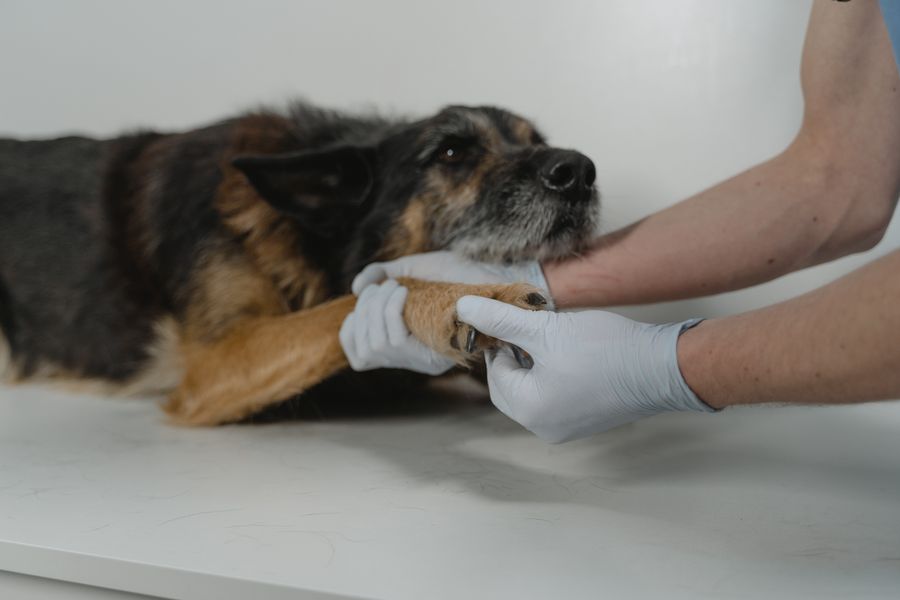
If paw licking is paired with swelling, odor, or limping, it’s time for a professional opinion.
When to See a Vet
See a vet soon if:
- One paw is clearly swollen, hot to the touch, or has an open wound
- You suspect a foreign object you can’t safely remove yourself
- There’s a strong odor or visible discharge
- The licking is severe enough to cause hair loss or raw skin (a “lick granuloma”)
- It’s paired with limping that doesn’t resolve in a day or two
Monitor and try home interventions first if:
- Licking is mild and intermittent
- It correlates clearly with a known seasonal pattern you can manage
- No visible skin changes, swelling, or odor are present
A telehealth consultation is a good first step in ambiguous cases — a licensed vet can often tell from a video assessment and your description whether this needs an in-person visit or can be managed with guidance and over-the-counter approaches.
Before the FAQ: Related Reading
Paw licking often connects to broader patterns in your dog’s health that are worth addressing directly rather than just managing the symptom. If food sensitivity seems like the likely driver, our best dog food for allergies guide covers the ingredient changes that resolve this for many dogs. If you suspect environmental allergens or parasites are contributing, our best natural flea and tick prevention guide covers prevention that reduces overall skin irritation. And for senior dogs where joint pain might be the underlying driver, our best joint supplements for senior dogs guide covers the supplementation that addresses the root cause rather than just the paw.
FAQ
Q: My dog’s paws are stained pink — is that serious? Pink or reddish-brown staining on light fur is from porphyrin, a compound in saliva that stains fur with chronic exposure. It’s not dangerous by itself, but it’s a clear sign of chronic licking that warrants figuring out the underlying cause rather than ignoring it.
Q: Can I put anything on my dog’s paws to stop the licking? Bitter-tasting deterrent sprays exist but only address the symptom, not the cause, and can be irritating themselves. It’s better to identify why your dog is licking and address that directly. A properly fitted recovery sock or boot can give irritated skin a chance to heal while you work on diagnosis.
Q: Is paw licking contagious between dogs in the same household? The behavior itself isn’t contagious, but if the cause is a fungal or bacterial infection, or environmental allergens both dogs are exposed to, multiple dogs in the same household can develop similar symptoms around the same time for the same underlying reason.
Q: How long is too long for a dog to lick their paws in one sitting? A quick grooming lick lasts seconds to a minute. If your dog is sustained-licking for 5+ minutes at a time, especially repeatedly throughout the day, that’s beyond normal grooming and worth investigating.
Q: My dog only licks their paws at night — why? Nighttime-specific licking often points toward anxiety (especially separation-related, if you’re not in the room) or simply that nighttime is when your dog is finally still enough to notice and attend to an itch that’s been present all day. If it’s purely nighttime and your dog seems otherwise fine, monitor for other anxiety signs and consider whether their evening routine has changed.
Q: Will switching dog foods definitely stop the licking? Only if the food is actually the cause. If allergies are food-driven, an appropriate diet change resolves it, often within 4–8 weeks. If the cause is environmental, anxiety, or injury-related, a food change won’t help — which is why correctly identifying the cause matters more than guessing and switching products repeatedly.