How to Clean Your Dog’s Teeth at Home (Without the Battle)
PetGearPal is reader-supported. If you buy through links on this page, we may earn a commission at no extra cost to you. As an Amazon Associate, we earn from qualifying purchases.
Last updated: May 2026 | ~1,850 words
Most Dogs Hate Having Their Teeth Brushed — Until You Do It Right
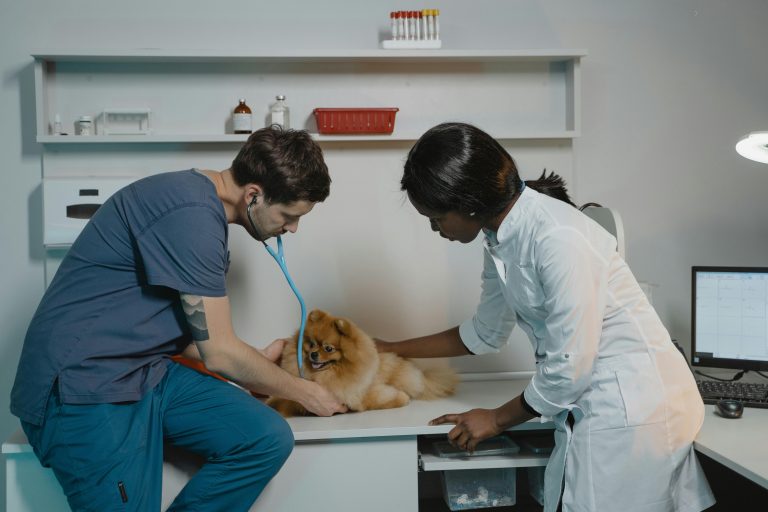
Knowing how to clean your dog’s teeth at home is one of the most impactful things you can do for their long-term health. Dental disease is the most common preventable health condition in dogs. By age three, 80% of dogs show signs of periodontal disease. Left untreated, it causes chronic pain, tooth loss, and has been linked to heart, kidney, and liver complications. Your vet knows this — it’s why they check your dog’s teeth at every appointment and why professional cleanings under anesthesia cost $500–$1,500.
The gap between “vet keeps recommending it” and “actually doing it at home” is technique. Most owners who try teeth brushing with their dog fail not because the dog is impossible to train, but because they jump straight to brushing without building up to it. A dog that hasn’t been conditioned to accept having their mouth handled will resist the toothbrush — not because they’re stubborn, but because you skipped several steps.
This guide covers the full protocol: how to actually get your dog to tolerate teeth brushing, what tools you need, and what else you can do when brushing isn’t realistic.
What You Need Before You Start
Dog toothbrush
Never use a human toothbrush. The bristle stiffness, handle angle, and head size are all wrong for a dog’s mouth. Dog toothbrushes come in three styles:
Standard handled brush — looks like a small human toothbrush with soft bristles. Works well for most medium and large breeds. Gives you control and distance from your dog’s mouth.
Finger brush — a silicone thimble with rubber bristles that fits over your fingertip. Allows more direct feel and control, which some dogs find less threatening. The tradeoff: your finger is in the dog’s mouth, which matters if you have a mouthy dog.
Dual-headed brush — angled heads at both ends, designed to reach front and back teeth simultaneously. Good for experienced brushers who want efficiency.
For first-timers and small breeds: start with a soft-bristled standard brush or a finger brush. Either works — what matters is that your dog accepts it.
View dog toothbrushes on Amazon →
Dog toothpaste
This is non-negotiable: never use human toothpaste on a dog. Human toothpaste contains fluoride, which is toxic to dogs when swallowed, and many formulas contain xylitol, which is potentially lethal. Dogs can’t rinse and spit.
Dog toothpaste comes in flavors dogs actually like — chicken, beef, peanut butter, and vanilla mint are common. The right flavor makes a significant difference in acceptance. Enzymatic toothpastes (containing glucose oxidase and lactoperoxidase) add a biological antibacterial component on top of the mechanical scrubbing action.
View enzymatic dog toothpaste on Amazon →
Optional: dental chews and water additives
For days you can’t brush, or to supplement brushing on the days you do, dental chews and water additives provide a meaningful second layer of protection. We cover dental chews in detail in our best dental chews for small dogs guide and our best dental chews for all breeds for reference.
Step-by-Step: How to Introduce Teeth Brushing
This is the process that actually works. It takes 10–14 days from start to consistent brushing, but each step is genuinely short — 2 to 5 minutes. Rushing the process is what causes most owners to give up.
Phase 1: Mouth handling (Days 1–3)
Before any toothbrush appears, your dog needs to be comfortable with you touching their mouth. Start by gently lifting their lips with one hand while giving a small treat with the other. Do this for 2 minutes, twice a day.
What you’re building: The association between mouth touching and good things. At the end of Day 3, your dog should be actively offering their face when they see you reach for them.
Phase 2: Finger + toothpaste only (Days 4–6)
Put a small amount of dog toothpaste on your fingertip and let your dog lick it off. Then apply a small amount to your finger and gently rub it along the outside of their upper teeth and gumline — no brush, just your finger.
What you’re building: Acceptance of something touching their teeth, and a positive association with the taste of the toothpaste.
Phase 3: Introduce the toothbrush without brushing (Days 7–8)
Let your dog sniff and lick the toothbrush. Put toothpaste on it and let them lick it off. Then hold the bristles against their teeth for a few seconds without moving them. Reward throughout.
What you’re building: Neutralizing the strangeness of the toothbrush before any scrubbing motion is introduced.

Phase 4: First real brushing session (Days 9–10)
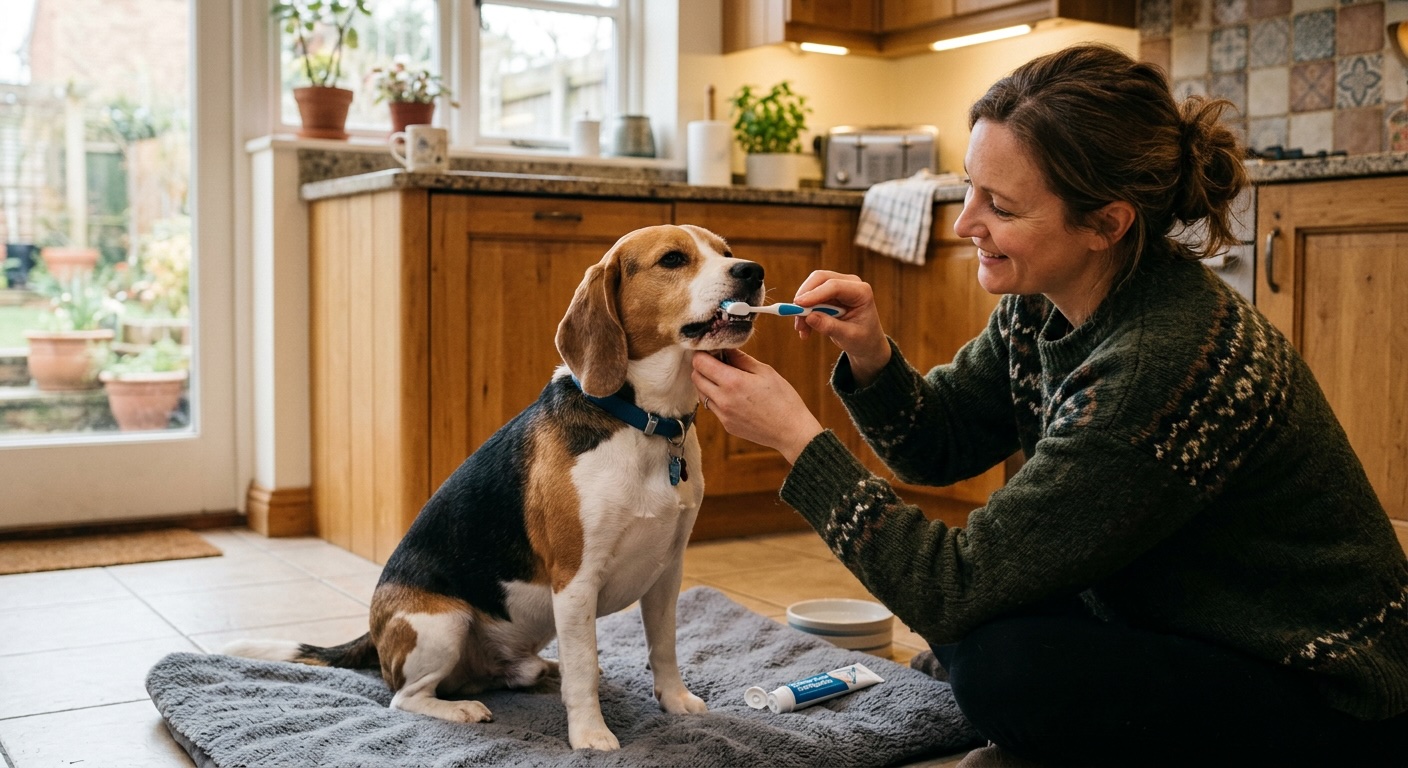
Apply a pea-sized amount of toothpaste to the brush. Gently lift the upper lip, hold the brush at a 45-degree angle toward the gumline, and use small circular motions on the outside surfaces of two to three teeth. Stop, reward generously, and repeat on a different section.
You don’t need to brush every tooth in one session — especially early on. 30 seconds of actual brushing on a cooperative dog beats two minutes of wrestling.
What you’re building: The first complete positive brushing experience.
Phase 5: Full mouth (Days 11–14)
Work toward brushing all surfaces you can access in one short session. Focus on the outside surfaces of the upper teeth, which accumulate the most tartar. If your dog tolerates it, work toward the lower teeth and eventually the inside surfaces — but don’t force it. Outside upper surfaces first, everything else is a bonus.
Goal: A 1–2 minute daily brushing session that your dog accepts without significant resistance.
Technique: The Details That Actually Matter
45-degree angle at the gumline. The bristles should be angled toward where the tooth meets the gum, not perpendicular to the tooth surface. This is where plaque accumulates and where mechanical disruption matters most.
Circular or short back-and-forth strokes. Either works. The motion mechanically breaks up the plaque biofilm that bacteria live in. You don’t need pressure — let the bristles do the work.
Focus on outside surfaces. The inside surfaces of the teeth are partially self-cleaned by the tongue. The outside surfaces — especially upper molars and premolars — accumulate the most tartar. If you only have time for one area, it’s the outside upper back teeth.
30 seconds per side, minimum. It doesn’t take long. One minute of total brushing time, done daily, is enough to make a meaningful difference in tartar accumulation.
Use two hands. One hand gently steadies the muzzle; the other holds the brush. This gives you control without restraining the dog uncomfortably.

When Brushing Isn’t Realistic: The Alternatives
Daily brushing is the goal. But even partial compliance plus complementary tools beats brushing alone when brushing is inconsistent.
Dental chews (VOHC-accepted)
The mechanical chewing action of a good dental chew scrubs tooth surfaces in a way that mimics some of the benefit of brushing. The VOHC-accepted options with clinical data behind them include Greenies (for most breeds), WHIMZEES (grain-free), and OraVet (with a unique antibacterial barrier mechanism). Used daily, they reduce tartar meaningfully.
Our full guide: Best Dental Chews for Small Dogs
Dental water additives
Add-to-water dental solutions contain enzymatic and antibacterial compounds that reduce bacterial load in the mouth. They’re the lowest-effort dental care option — you simply add a capful to your dog’s water bowl. They work best as a supplement to brushing or chewing, not as a standalone solution.
View dog dental water additives on Amazon →
Dental wipes
A dental wipe wrapped around your finger lets you wipe plaque off tooth surfaces without a toothbrush. Less effective than brushing but better than nothing for dogs that won’t accept any toothbrush at all. Good as a bridge tool while you work through the conditioning process above.
View dog dental wipes on Amazon →
Raw bones (supervised)
Raw meaty bones (never cooked — cooked bones splinter) provide natural mechanical cleaning through extended chewing. Many veterinary dentists recommend them as a supplement to brushing. Not suitable for aggressive chewers (“wreck-it” dogs), dogs with existing dental fractures, or dogs prone to resource guarding.
How Often Should You Brush Your Dog’s Teeth?
Daily is the goal — the same as humans. Plaque begins to harden into tartar within 24–48 hours of forming. Daily disruption prevents this cycle.
Every other day produces meaningful benefit, though not as much as daily.
Two to three times per week begins to show declining returns on tartar control. Some tartar accumulation is likely at this frequency over time.
Once a week or less is better than never, but probably not sufficient to prevent professional cleanings over your dog’s lifetime.
The honest truth: imperfect daily brushing (30 seconds, some teeth skipped) outperforms perfect weekly brushing for tartar prevention. Consistency matters more than technique.
Signs Your Dog Already Has Dental Disease
If you’re just starting a dental care routine, check for these signs that your dog may already have significant disease requiring professional attention before home care can maintain:
- Yellow or brown buildup on teeth, especially upper premolars and molars
- Red, swollen, or bleeding gums when touched or brushed
- Persistent bad breath that doesn’t improve with dietary changes
- Difficulty eating, dropping food, or favoring one side of the mouth
- Excessive drooling or pawing at the mouth
- Visible tooth damage — cracks, fractures, or discoloration
If you see any of these signs, a professional dental cleaning (performed under anesthesia) is likely needed before home care can be effective. Home care maintains a clean mouth — it doesn’t reverse advanced disease.
Before the FAQ: Planning for the Costs
Professional dental cleanings under anesthesia run $500–$1,500 depending on your location, your dog’s size, and whether extractions are needed. Dogs with untreated periodontal disease often need multiple extractions, pushing costs significantly higher. Our guide to the best pet insurance for dogs covers whether pet insurance is worth it for dental care — dental illness coverage varies significantly by plan, and it’s worth understanding your options before your dog needs a cleaning. For senior dogs specifically, dental disease often accompanies joint disease; our best joint supplements for senior dogs guide is worth pairing with a dental care routine.
For dogs that resist brushing entirely, dental chews are the most effective supplement — our guide to the best dental chews for small dogs covers the VOHC-accepted options with real clinical data behind them. And if your dog’s dental health has already declined to the point where professional cleaning is needed, our pet insurance guide is worth reviewing before that bill arrives — dental illness is one of the most common claims.
FAQ
Q: My dog hates having their mouth touched. Is there any hope? Yes — almost every dog can be conditioned to accept teeth brushing with the systematic approach above. The key is starting with Phase 1 (mouth handling only, no toothbrush) and not rushing. Most dogs that “hate teeth brushing” have never been properly conditioned; they were introduced to the toothbrush without preparation.
Q: Can I use a children’s toothbrush instead of a dog toothbrush? A soft-bristled children’s toothbrush in the right size is acceptable in a pinch — the bristle softness is what matters most. The handle angle won’t be ideal. If you use a children’s brush, make sure it’s dedicated to your dog and clearly labeled, and never use human toothpaste with it.
Q: How do I brush my dog’s teeth if they won’t let me open their mouth? You don’t need to open their mouth fully for effective brushing. The outside surfaces of the teeth are accessible by gently lifting the lips — no forced jaw opening required. The inside surfaces are harder to access and less critical than the outside. Focus on what you can reach without forcing.
Q: Are certain breeds harder to maintain dental health in? Yes. Brachycephalic breeds (French Bulldogs, Pugs, Bulldogs) and small breeds generally (Chihuahuas, Yorkies, Maltese, Toy Poodles) have worse dental disease rates than larger breeds due to tooth crowding in smaller jaws. These breeds benefit most from daily dental care and typically need more frequent professional cleanings.
Q: At what age should I start brushing my dog’s teeth? As early as possible — ideally as a puppy before 6 months, while adult teeth are coming in. Puppies conditioned to mouth handling early accept it much more readily as adults. That said, it’s never too late to start; older dogs can learn to accept brushing with patient conditioning.
Q: How do I know if my dog’s teeth are actually getting cleaner? Check the upper back teeth (premolars and molars) under good light. After 2–4 weeks of consistent daily care, you should see less yellow-brown buildup on those surfaces. Gums should look pink rather than red or inflamed. Bad breath should noticeably improve. If you see no improvement after a month of daily care, your dog may already have significant tartar that requires a professional cleaning to remove before home care can maintain.
Q: Do dogs need their teeth professionally cleaned even with regular brushing? Potentially yes, less frequently. Daily brushing significantly slows tartar accumulation but may not eliminate it entirely in all dogs. Many dogs on consistent home dental care go 2–3+ years between professional cleanings rather than annually. Some dogs on rigorous home care routines never need a professional cleaning. Your vet’s assessment at annual checkups is the best guide.