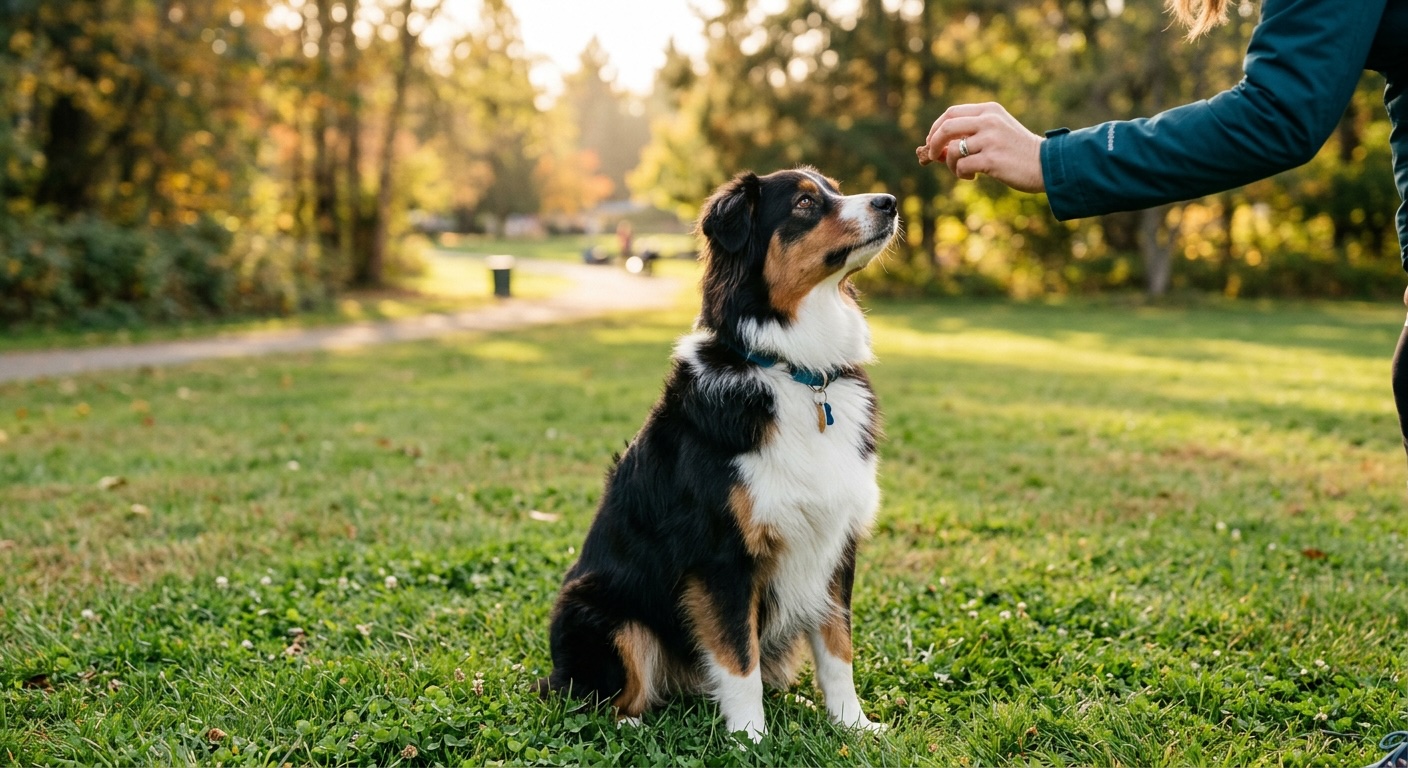
Best Dog Training Treats in 2026: Small Bites, Big Results
PetGearPal is reader-supported. If you buy through links on this page, we may earn a commission at no extra cost to you. As an Amazon Associate, we earn from qualifying purchases.
Last updated: May 2026 | ~1,850 words
The Right Treat Makes Training Click Faster
Training a dog is mostly a mechanical problem: you need something your dog wants badly enough to work for, delivered fast enough to connect the behavior to the reward. Most treats that seem like “training treats” fail one of those two tests. They’re too big (your dog stops to chew, breaking the training rhythm), too dry (your dog doesn’t care enough), or too calorie-dense to use in the volume that real training sessions require.
The treats in this guide get both right — small enough to gulp in one bite, aromatic enough to be genuinely motivating, and low enough in calories that you can run a 15-minute session without blowing your dog’s daily intake.
Quick answer: MalsiPree leads our water bottle article, but for treats — Blue Buffalo Bits is the best all-around training treat for most dogs. Pupford Freeze-Dried Beef Liver is the highest-value option for serious training. Old Mother Hubbard Mini Biscuits is the best budget option for high-volume training.
Comparison Table: Best Dog Training Treats (2026)
| Treat | Type | Size | Calories/Treat | Price | Rating |
|---|---|---|---|---|---|
| Blue Buffalo Bits | Soft chew | Small | ~3 kcal | ~$15 / 19oz | ⭐ 4.7 (15.9K reviews) |
| Pupford Freeze-Dried Beef Liver | Freeze-dried | Mini | ~1.5 kcal | ~$17 / 4oz (475+ pieces) | ⭐ 4.6 (7.9K reviews) |
| Wellness Rewarding Life | Soft chew | Small | ~2.5 kcal | ~$8 / 6oz | ⭐ 4.7 (2.6K reviews) |
| Old Mother Hubbard Mini Biscuits | Baked biscuit | Mini | ~4 kcal | ~$14 / 6lb | ⭐ 4.8 (5.1K reviews) |
What Makes a Training Treat Actually Work
Size is the most important variable. A treat your dog has to chew is a treat that pauses training. Ideal size is around a pea — small enough to swallow immediately so the next rep can begin within seconds. If your treats are too big, break them into pieces before the session.
Aroma drives motivation. Dogs are nose-first animals. A strongly aromatic treat — beef liver, salmon, real chicken — commands attention in a way that a dry biscuit doesn’t. Freeze-dried single-protein treats have the strongest natural smell and tend to produce the most reliable focus, especially for easily-distracted dogs.
Calorie count matters more than you think. A treat that’s 10 calories sounds fine until you’ve given 50 in a session. Training with high-calorie treats frequently leads to weight gain that most owners don’t connect to training at all. Look for treats under 5 calories per piece and you can run full sessions without guilt or diet adjustment.
Soft vs. crunchy: Soft treats are generally better for training — they’re faster to consume, easier to break into smaller pieces, and work better for puppies and senior dogs with dental sensitivities. Crunchy biscuits are fine for lower-frequency reward scenarios or dogs that prefer the texture, but for rapid-repetition obedience work, soft wins.
Ingredient quality: Look for a named protein as the first ingredient (chicken, beef, salmon — not “meat meal” or “animal by-products”). Grain-free isn’t automatically better or worse — it depends on your dog’s specific needs — but artificial colors and preservatives are genuinely worth avoiding in a treat your dog eats frequently.
Our Top Picks
🥇 1. Blue Buffalo Bits Soft Dog Treats — Best Overall
Price: ~$14.98 | 4.7 stars | 15,889 reviews View on Amazon →
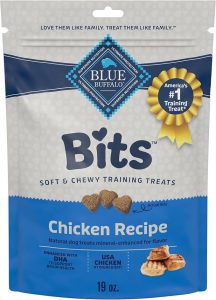
Blue Buffalo Bits are the training treat that checks every box without making any compromises. Real deboned chicken is the first ingredient. Each piece is roughly pea-sized and soft enough for a Border Collie to swallow mid-session without slowing down. DHA from fish oil supports cognitive development — a nice bonus for puppies. No artificial flavors, colors, or preservatives.
The 19-oz bag is the best value format and gives you enough volume to run serious training sessions across multiple weeks without constant reordering. At around 3 calories per treat, you can deliver 40–50 rewards in a session and barely dent your dog’s daily caloric budget.
Across nearly 16,000 verified reviews the consistent theme is simple: dogs that aren’t interested in other treats come alive for these. For the Beagle who ignores kibble rewards and the Husky who only performs for high-value food, Blue Buffalo Bits thread the needle between quality and palatability reliably.
What we love:
- Real deboned chicken as first ingredient
- ~3 kcal per treat — low enough for high-volume sessions
- Pea-sized format — swallowed immediately, no chewing pause
- DHA-enhanced for cognitive support
- 15,000+ verified reviews at 4.7 stars
- 19-oz bag is genuinely good value
Watch out for:
- Contains chicken — not suitable for dogs with confirmed chicken allergy
- Soft treats have shorter shelf life once opened; reseal or transfer to airtight container
Best for: All-purpose training for any breed or age, puppies learning basics, owners who want one reliable treat for everything
🥈 2. Pupford Freeze-Dried Beef Liver — Best for High-Value Training
Price: ~$16.89 | 4.6 stars | 7,962 reviews View on Amazon →
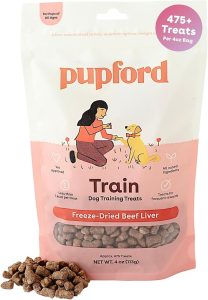
Freeze-dried beef liver is the training treat that works when nothing else does. The aroma is intense — much stronger than a cooked or dried treat — and that intensity directly translates to focus and motivation, even in distracted or high-drive dogs. For recall training in a dog park, focus work around other dogs, or teaching a behavior your dog finds genuinely difficult, you need a treat that’s worth working for. Freeze-dried liver is it.
Pupford’s version contains exactly three ingredients (beef liver, water, and nothing else), comes with 475+ pieces per 4-oz bag, and clocks in at roughly 1–2 calories per piece. The tiny size means you can run a serious recall session and not worry about caloric load.
The tradeoff is smell — your pockets will smell like beef liver for the rest of the day. This is not a problem if your dog is responding to cues they’ve been ignoring for months. It’s the expected trade.
What we love:
- Three ingredients only: beef liver, water, nothing else
- 475+ pieces per bag — excellent volume for training
- ~1–2 kcal per treat — lowest calorie option on this list
- Intense aroma = maximum dog motivation
- Grain-free and single-protein
Watch out for:
- The smell. Be prepared.
- Freeze-dried treats are more fragile — keep in the bag or a hard container
- Not for dogs with beef sensitivity
Best for: High-distraction environments, recall training, working on difficult behaviors, high-drive breeds (Belgian Malinois, Border Collies, German Shepherds), owners who’ve tried everything else
🥉 3. Wellness Rewarding Life — Best for Sensitive Stomachs
Price: ~$7.99 | 4.7 stars | 2,601 reviews View on Amazon →
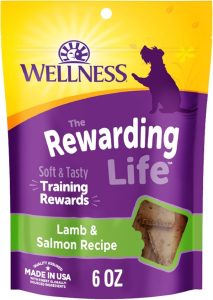
Wellness’s training treats are the go-to for dogs with sensitive digestive systems that don’t tolerate the chicken-based treats most brands lead with. The lamb and salmon formula is grain-free and built around proteins less likely to trigger sensitivities. The soft texture is gentle enough for puppies and senior dogs with dental issues, and the small format works for rapid-repetition sessions.
At $7.99 for a 6-oz bag, it’s the most accessible price point on this list — meaningful for households running daily training sessions across multiple dogs or an extended training period.
What we love:
- Grain-free lamb and salmon — novel proteins for most dogs
- Soft texture suitable for puppies and seniors
- Genuine Wellness brand quality standards
- Best price per bag in this roundup
- No artificial colors, flavors, or preservatives
Watch out for:
- 6-oz bag runs out faster than the Blue Buffalo 19-oz
- Less aromatic than freeze-dried options — may not work for very distracted dogs
Best for: Dogs with chicken sensitivity, puppies, senior dogs, budget-conscious owners, households with multiple dogs in training
4. Old Mother Hubbard Mini P-Nuttier Biscuits — Best for High-Volume / Budget Training
Price: ~$14.39 | 4.8 stars | 5,134 reviews View on Amazon →
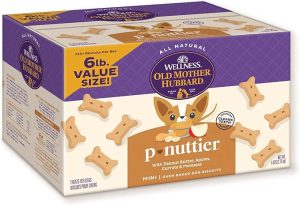
Six pounds of mini peanut butter biscuits at 4.8 stars — Old Mother Hubbard’s mini biscuits are the bulk training treat for owners who go through volume. The peanut butter flavor is reliably palatable across breeds, the mini biscuit size is appropriate for training (small enough to eat quickly), and at ~$14 for 6 lbs, the cost per treat is the lowest on this list by a significant margin.
These are baked biscuits rather than soft chews, which means they’re slightly slower to consume than the Blue Buffalo Bits. For puppies or dogs with dental sensitivity they’re not ideal. For a healthy adult Dachshund or Corgi running 30-minute obedience sessions every morning, this 6-lb box is a 3-month supply at negligible cost.
What we love:
- 6-lb box — the best cost-per-treat value on this list
- 4.8 stars at 5,000+ reviews — outstanding rating
- Peanut butter flavor is broadly appealing
- Mini size appropriate for training
- Baked in the USA
- No corn syrup, artificial flavors, or colors
Watch out for:
- Baked biscuit texture is slower to consume than soft treats
- Not appropriate for dogs with peanut allergy
- Harder texture not suitable for puppies under 4 months or dogs with significant dental issues
Best for: Adult dogs, high-volume trainers, cost-conscious owners, multi-dog households, long training programs where treat costs add up
How to Use Training Treats Effectively
Keep sessions short. Dogs learn better in 5–10 minute sessions than 45-minute marathons. Shorter sessions mean fewer total treats per day, which means you can afford to use higher-value treats without worrying about caloric overload.
Vary the reward rate. Don’t treat every single repetition forever. Once a behavior is learned, switching to intermittent reinforcement (random treat delivery) actually strengthens the behavior. Slot machines work on this principle — the unpredictability of reward increases persistence.
Account for treats in daily calories. Treats should make up no more than 10% of your dog’s daily caloric intake. If you’re running daily training sessions, factor that into their meal portions accordingly. With the low-calorie options on this list (~1–3 kcal per piece), this is manageable.
Keep treats hidden until delivery. If your dog can see or smell treats on your hand constantly, they learn to watch your hand rather than engage with the behavior. Use a treat pouch clipped to your belt or pocket and deliver treats from it.
Match treat value to task difficulty. Save the freeze-dried liver for recall training and high-distraction scenarios. Use the lower-value soft biscuits for behaviors your dog already knows well. This preserves the motivational power of your best treats for when you actually need it.
Before the FAQ: Further Reading
Training treats work best as part of a broader nutrition and routine strategy. If your dog is on a fresh or raw food diet, you may already be feeding protein-rich meals that reduce the novelty value of standard treats — our We Feed Raw review covers this dynamic in detail. For dogs with food sensitivities that affect what training treats they can tolerate, our guide to the best dog food for allergies has the framework for identifying safe proteins. And if you’re training a senior dog with joint stiffness that’s affecting their ability to engage in long sessions, the best joint supplements for senior dogs are worth pairing with any training routine.
FAQ
Q: How many training treats can I give my dog per day? Treats should make up no more than 10% of your dog’s daily caloric intake. For a 30-lb dog eating 750 calories/day, that’s 75 calories from treats — roughly 25 pieces of Blue Buffalo Bits or 50 pieces of Pupford freeze-dried liver. For most training sessions this is plenty.
Q: What’s the difference between soft and freeze-dried training treats? Soft treats are faster to consume, easier to break into smaller pieces, and gentler on teeth — ideal for puppies and seniors and for rapid-repetition training. Freeze-dried treats have more intense aroma and flavor, making them higher-value for difficult behaviors or high-distraction environments. Most trainers use both.
Q: Can I use my dog’s regular kibble as training treats? Yes — and professional trainers often recommend starting there to keep calories in check. Kibble works best for dogs that are food-motivated and trained before meals when they’re hungry. For dogs that aren’t strongly food-motivated, or for high-distraction scenarios, commercial training treats with stronger aroma work better.
Q: Are grain-free training treats better? Not automatically. Grain-free is beneficial for dogs with confirmed grain sensitivities, but the FDA’s ongoing DCM investigation is worth discussing with your vet if you’re feeding grain-free across both meals and treats consistently. For most dogs, grain-free vs. grain-inclusive is a personal choice rather than a health necessity.
Q: At what age can puppies have training treats? Most soft training treats are appropriate from 8 weeks. Avoid hard biscuits until your puppy has their adult teeth (around 6 months). Check individual product labels — most specify a minimum age, typically 8 weeks for soft treats.
Q: Should I use treats forever in training? No — treats are a teaching tool, not a permanent management strategy. Once a behavior is reliably learned, transition to intermittent treat reinforcement and add verbal praise, play, or access to activities as rewards. This builds a more resilient behavior that doesn’t depend on treat delivery to perform.
Q: My dog stops taking treats when they’re excited or distracted. What should I do? Increase treat value. A dog that refuses kibble or biscuits in a distracted state will often take freeze-dried liver. If even that doesn’t work, the training environment may be above the dog’s current threshold — move to a lower-distraction setting and work back up gradually.