Best Dog Nail Clippers in 2026: How to Trim Without the Drama
PetGearPal is reader-supported. If you buy through links on this page, we may earn a commission at no extra cost to you. As an Amazon Associate, we earn from qualifying purchases.
Last updated: July 2026 | ~1,950 words
Most Dogs Hate Nail Trims. Most Owners Hate Them Too. The Right Tools Help.
Finding the best dog nail clippers for your dog’s size and temperament makes the whole process dramatically easier. Long nails are one of the most common and most overlooked dog health problems. Nails that click on hard floors are already too long — at that length, they’re pushing the toe joints back with every step, altering gait, and in chronic cases contributing to joint pain and postural problems that look exactly like arthritis.
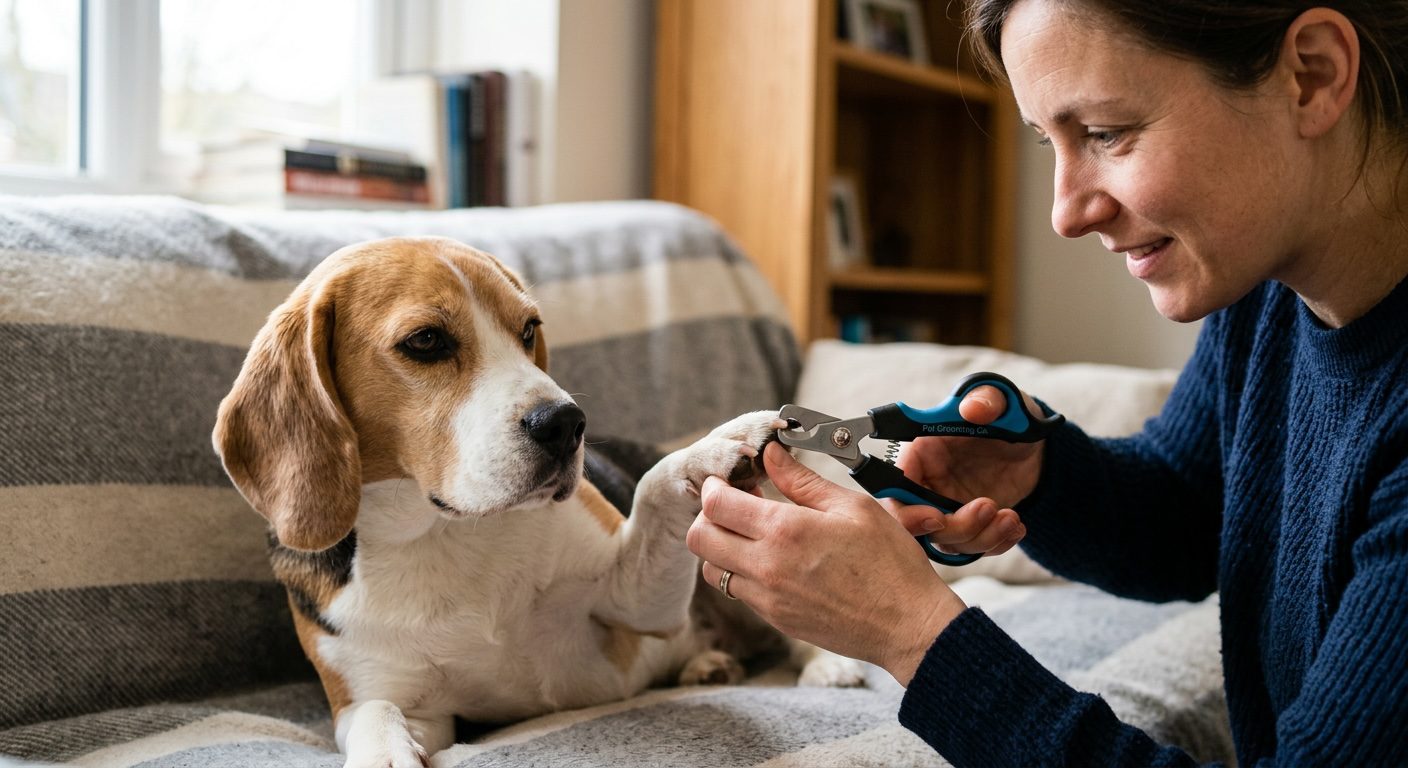
The good news: trimming dog nails at home is genuinely achievable, even for dogs who currently fight it. The process takes practice, consistency, and the right equipment. This guide covers the best nail clippers for dogs across every size and temperament, how to actually use them, and what to do if your dog is in the “absolutely not” camp about the whole thing.
Types of Dog Nail Clippers: Which Are Best?
Scissor/bypass clippers: Work like scissors — two curved blades pass each other to cut. Good for thick nails on large dogs. More control and leverage than guillotine style.
Guillotine clippers: The nail is inserted through a hole and a blade slides across to cut. Work well for small-to-medium dogs with thinner nails. Can crush rather than cut as the blade dulls — require frequent blade replacement.
Plier-style clippers: A sturdier version of scissor clippers, with spring-loaded handles for easier repeated use. Best choice for large breeds with thick, hard nails.
Grinders/dremels: Rotate to file the nail down rather than cut. No sharp cut, no risk of guillotine crush, easier to control depth. Trade-off: noise and vibration that some dogs find more upsetting than clippers, and longer per-session time. Excellent for finishing after clippers or for dogs who’ve had traumatic clipping experiences.
Comparison Table: Best Dog Nail Clippers (2026)
| Clipper | Type | Best For | Price |
|---|---|---|---|
| Millers Forge Resco | Scissor | Large dogs, thick nails, professional use | ~$15–25 |
| Safari Professional | Scissor | Small-to-large, most common home use | ~$10–18 |
| Dremel PawControl | Grinder | Anxious dogs, finishing, all sizes | ~$35–50 |
| Boshel Nail Clippers | Plier/scissor | Medium-large dogs, safety guard included | ~$15–20 |
| Epica Pet Nail Clipper | Scissor | Medium dogs, beginners | ~$12–16 |
Our Top Picks
🥇 1. Millers Forge Resco — Best Overall for Large Dogs
View on Amazon → (4.7★ · 8,000+ reviews)
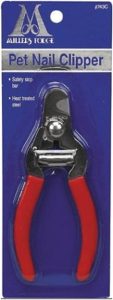
Resco makes the clippers used by professional groomers and veterinary technicians, and the Millers Forge version brings that same quality to the consumer market. The scissor design gives real leverage on thick nails without the crushing risk of guillotine clippers — important for large breeds where dull blades are a particular problem. Blades stay sharp significantly longer than budget options and are replaceable when they do dull.
The safety stop (a small metal bar that limits how far you can cut) is more reliable than on most consumer clippers — genuinely useful for preventing overcutting while you’re still calibrating how much to take. Handles are large enough to grip comfortably even with thick gloves.
Best for: Dogs over 40 lbs, thick or dark nails, owners who trim frequently
🥈 2. Safari Professional Nail Trimmer — Best Everyday Home Clipper
View on Amazon → (4.5★ · 25,000+ reviews)

Safari’s scissor-style clippers are probably the most commonly recommended by vets and groomers for home use across all dog sizes. They’re sharp, comfortable to hold, work on small to large nails, and are inexpensive enough that replacing them when they dull isn’t a painful decision. The spring-loaded handle reduces hand fatigue during longer sessions.
Not the most heavy-duty option for giant breeds with exceptionally thick nails — that’s Resco territory — but for the majority of dogs and owners, these are the right choice and hard to meaningfully improve on at this price.
Best for: Most dogs and most owners — the default recommendation
🥉 3. Dremel PawControl — Best Grinder for Anxious or Sensitive Dogs
View on Amazon → (4.4★ · 12,000+ reviews)
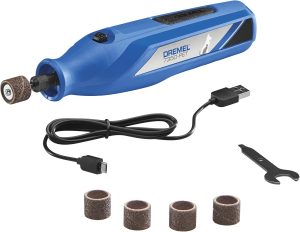
The Dremel PawControl is designed specifically for pets — quieter than a standard rotary tool (though still audible), with a guard that limits how much nail contacts the drum at once. The grinder approach has real advantages for dogs who’ve had bad clipping experiences: there’s no sudden cut, no risk of hitting the quick with a sharp blade, and you can take off tiny amounts at a time until you’re confident.
The trade-off is time — grinding takes longer per nail than clipping — and some dogs find the vibration more distressing than the click of clippers. Worth trying if clippers have been a consistent battle; many dogs who despise clippers tolerate the grinder well once desensitized to the sound.
Best for: Dogs anxious about clipping, thick-nailed dogs who need a smooth finish, owners who struggle to judge where to cut
4. Boshel Dog Nail Clippers — Best Budget Pick with Safety Guard
View on Amazon → (4.4★ · 50,000+ reviews)
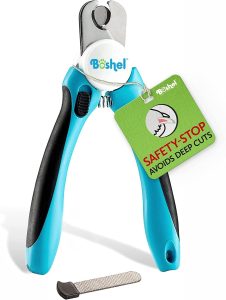
Boshel’s clippers are one of the highest-reviewed options on Amazon by volume, and they earn it through genuine quality at a very accessible price. The built-in safety guard is more prominent than on most clippers — genuinely useful for beginners still learning how much nail to take. Includes a small nail file built into the handle for finishing sharp edges.
Not as durable as Resco or Safari for heavy frequent use, and the safety guard can get in the way for experienced trimmers who don’t need it. But as a starting point or backup pair, very solid.
Best for: Beginners, occasional home trimmers, owners of medium-to-large dogs on a budget
5. Epica Pet Nail Clipper — Best for Small Dogs
View on Amazon → (4.4★ · 15,000+ reviews)
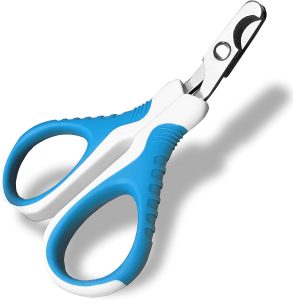
Smaller scissor-style clipper built for the thinner, smaller nails of small breeds. More manageable size for small hands or for controlling the trim on a squirming small dog. The smaller blade is more precise and easier to control when there’s less nail to work with. Sharp and durable for the price.
Best for: Dogs under 20 lbs, toy breeds, puppies
Essential Accessories
Styptic powder — If you cut into the quick (the blood vessel inside the nail), styptic powder stops bleeding in seconds. Kwik Stop is the standard. Have this within arm’s reach every time you trim — you will eventually hit the quick, especially on dark nails.
High-value treats — The single biggest factor in whether nail trims become manageable. Use something reserved exclusively for nail trims — real meat, cheese, commercial high-value treats. Our best dog training treats guide covers the options.
Nail file or scratch board — For finishing sharp edges after clipping, or for dogs who’ll file their own nails by pawing at a sandpaper-covered board (a real thing that works surprisingly well for front nails).

How to Trim Dog Nails: The Basics
Find the quick: In light-colored nails, the quick is visible as a pink area inside the nail — cut just before it. In dark nails, cut a small amount at a time and look at the cross-section after each cut. When you see a small dark dot appear in the center, stop — that’s the edge of the quick.
Cut at the right angle: Most dog nails curve downward. Cut at roughly a 45-degree angle following the curve of the nail, not straight across. This removes more length while staying away from the quick.
Take small amounts: Better to make three small cuts than one large cut. You can always take more off — you can’t undo cutting the quick.
Do all nails in one session if possible: Consistency matters. But if your dog hits their limit, stop and resume another day — a partial session done calmly is better than a full session done under duress.
Don’t forget the dewclaws: The fifth claw that sits higher on the inside of the front leg (and sometimes rear leg) doesn’t touch the ground and doesn’t self-wear. It overgrows fastest and can curl back into the paw pad if neglected.
For Dogs Who Hate Nail Trims: A Realistic Approach
If your dog currently fights nail trims, forcing the issue makes it worse. A proper desensitization protocol:
Week 1–2: Touch the paw, treat immediately. No clippers, no cutting. Do this 20 times per session until your dog is relaxed about paw handling.
Week 3: Introduce the clippers visually — let the dog sniff them, clip them in the air near the dog, treat throughout. No touching the nails yet.
Week 4: Touch the clipper to the nail without cutting. Treat.
Week 5: Clip one nail, give a jackpot of treats. Done for the day. Genuinely one nail.
Build from there: Add one nail per session until you can complete a full set over multiple sessions, then compress sessions as the dog’s tolerance grows.
This takes weeks, not days. It’s worth it — a dog who tolerates nail trims calmly is a much safer trim for everyone. For dogs whose nail anxiety is severe, Dutch can advise on whether situational anxiety medication is appropriate to help bridge the gap while desensitization is underway.
Before the FAQ: Related Reading
Nail trim anxiety often overlaps with broader handling sensitivity — if your dog struggles with being touched generally, our guide to calming an anxious dog covers the behavioral toolkit for handling-related anxiety. For dogs whose nail sensitivity may have a pain component, our signs your dog is in pain guide covers the behavioral signals worth investigating before assuming it’s purely behavioral.
FAQ
Q: How often should I trim my dog’s nails? Every 2–4 weeks for most dogs. A reliable indicator: if you can hear nails clicking on hard floors, they’re already too long. Very active dogs who walk on pavement may wear their nails naturally and need less frequent trimming.
Q: What happens if I cut the quick? The nail bleeds, the dog is briefly uncomfortable, and you apply styptic powder. It’s unpleasant but not a veterinary emergency. The main consequence is the dog remembering it happened — which is why having styptic powder ready for fast application matters, and why not making a big deal of it matters too.
Q: My dog’s nails are black and I can’t see the quick. How do I avoid cutting too deep? Trim in small increments and examine the cross-section after each cut. In the center of the nail, you’ll see a white or grey area — keep cutting small amounts until a small dark dot appears in that center area. That dot is the edge of the quick. Stop there.
Q: Can I just take my dog to a groomer? Yes, and for dogs who are genuinely difficult, professional groomers handle this regularly. Many veterinary offices also offer nail trim appointments, sometimes same-day, as a standalone service. Not every dog needs to be trimmed at home.
Q: My dog’s nails are extremely long and curved. Can I fix this in one session? No — overgrown nails have a quick that’s grown long along with the nail. Cutting back to the correct length all at once would cut into the quick. Trim a small amount every week; the quick will recede over 4–8 weeks and you can gradually restore appropriate nail length.
Q: Are grinders better than clippers? Neither is objectively better — it depends on the dog. Clippers are faster; grinders give more control. Many experienced owners use clippers to remove most length, then a grinder to smooth and finish. Try both and see what your dog tolerates better.