How to Clean Your Dog’s Ears at Home (And When to See a Vet)
PetGearPal is reader-supported. If you buy through links on this page, we may earn a commission at no extra cost to you. As an Amazon Associate, we earn from qualifying purchases.
Last updated: July 2026 | ~2,000 words

Healthy dog ears are largely self-cleaning — but some dogs genuinely need regular maintenance.
Most Dogs Never Need Their Ears Cleaned. The Ones That Do Need It Done Right.
Learning how to clean your dog’s ears correctly matters more than most owners realise. Ear cleaning is one of those dog care tasks that gets either completely ignored or overdone — rarely handled correctly. The truth is that healthy dog ears are largely self-cleaning, and routine cleaning of a normal ear does more harm than good. But for dogs prone to ear problems — floppy-eared breeds, frequent swimmers, allergy-prone dogs — targeted cleaning at the right intervals is genuinely important for preventing infections.
This guide covers how to tell whether your dog’s ears actually need cleaning, how to do it correctly, and the signs that mean you’ve moved past a job for home care.
How to Tell If Your Dog’s Ears Actually Need Cleaning
The first question isn’t how to clean — it’s whether to clean. Healthy ears have:
- A light pink color inside
- No visible debris or discharge
- No odor
- No redness or swelling
- A dog that doesn’t scratch at or shake their head about their ears
If all of those are true, your dog’s ears are doing fine and don’t need intervention. Cleaning a healthy ear disrupts the natural environment and can actually increase infection risk.
Signs that cleaning is warranted:
- Visible dark brown or waxy buildup at the ear canal entrance
- Mild odor without discharge
- Your dog has been swimming recently
- Your vet has recommended routine cleaning for your specific dog
Signs that you need a vet, not a cleaning:
- Strong or foul odor (yeast smell, fishy smell, or anything distinctly unpleasant)
- Black, yellow, or bloody discharge
- Redness, swelling, or heat inside the ear
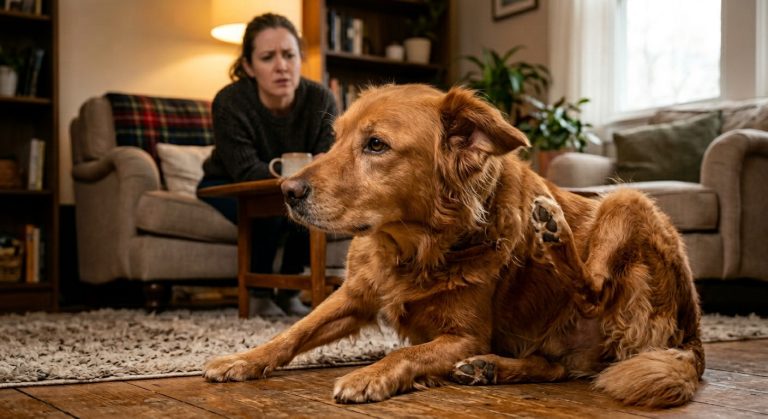
- Your dog cries when the ear is touched, shakes their head persistently, or holds the ear down
- You can see dark granular debris (may indicate ear mites)
- The ear has already been treated and hasn’t resolved
These last signs indicate active infection or infestation — cleaning an infected ear without treating the underlying cause won’t help and may push debris further in. A Dutch telehealth vet can often assess ear issues via video and prescribe appropriate medication (antifungal, antibiotic, or antiparasitic drops) same day.
What You Need
- Veterinary ear cleaning solution — not water, not hydrogen peroxide, not vinegar, not alcohol. Use a commercial ear cleaner formulated for dogs. Good options are widely available at pet stores and online. Look for ones with drying agents (like salicylic acid) if your dog swims frequently.
- Cotton balls or gauze pads — not cotton swabs (Q-tips). Swabs push debris deeper into the ear canal and risk damaging the eardrum.
- Treats — high value, reserved for ear cleaning only so the dog associates the process with something good.
- A towel — dogs shake after ear cleaning. Anything within 3 feet will get wet.

Step-by-Step: How to Clean Your Dog’s Ears
Step 1: Position your dog comfortably
Sit on the floor with a medium or large dog between your legs or next to you. For small dogs, a lap or table works well. Have your treats ready.
Step 2: Examine the ear before starting
Lift the ear flap gently and look inside. You’re confirming there’s no redness, swelling, or discharge that would indicate this isn’t a cleaning situation. If anything looks wrong, stop and call your vet.
Step 3: Apply the ear cleaning solution
Hold the ear flap up and fill the ear canal with cleaner until it’s full — don’t be shy about the amount. The ear canal in dogs is L-shaped, and you need enough solution to reach the horizontal canal.
Step 4: Massage the base of the ear
Fold the ear flap down and massage the base of the ear firmly for 30 seconds. You’ll hear a squishing sound — that’s the solution breaking up debris in the canal. This is the step most owners rush, and it’s the most important one.
Step 5: Let your dog shake
Release the ear and step back. Let the dog shake — this brings loosened debris up and out of the canal.
Step 6: Wipe the outer ear
Use a cotton ball or gauze pad to gently wipe the visible parts of the outer ear canal and the inner ear flap. Only go as deep as your finger can comfortably reach. Don’t probe deeper.
Step 7: Repeat on the other ear
Even if one ear seemed fine, clean both. Give a treat after each ear, not just at the end — keeping the association positive throughout matters more than a single reward at the finish.
Step 8: Don’t dry with a swab
Let the ear air dry naturally, or use a cotton ball to absorb surface moisture. The ear cleaner itself handles drying the canal — that’s what the drying agents are for.
How Often Should You Clean?
Most dogs: Never, unless there’s a specific reason (post-swim, visible buildup, vet recommendation).
Dogs prone to ear issues (floppy ears, allergies, frequent swimmers): Every 2–4 weeks, or as directed by your vet. After every swim or bath for dogs with a known tendency toward ear infections.
Dogs with a current or recent infection: Follow your vet’s specific instructions. During active infection treatment, cleaning protocol changes.
Over-cleaning is a real problem. Cleaning more than necessary strips beneficial microorganisms from the ear and creates an environment where pathogens thrive. If you’re cleaning more than once a week without a specific vet recommendation, that’s too often.
Breed-Specific Considerations
Floppy-eared breeds (Basset Hounds, Cocker Spaniels, Labrador Retrievers, Golden Retrievers, Poodles): The ear flap covers the canal and traps moisture and heat, creating ideal conditions for yeast and bacterial growth. These breeds genuinely need monitoring and periodic cleaning — ear infections are a near-certainty without it for many individuals.
Hairy ear canals (Poodles, Schnauzers, Shih Tzus): Hair growing inside the ear canal is a point of debate in veterinary circles. Groomers routinely pluck this hair; some vets recommend it, others don’t. If you’re unsure, ask your vet specifically about your dog.
Dogs with allergies: Ear infections are frequently a symptom of underlying allergies (environmental or food), not a standalone problem. If your dog gets recurrent ear infections, the ear is usually not the primary issue — the allergy is. Treating each infection without addressing the underlying allergy produces an endless cycle. Our guide to the best dog food for allergies covers the dietary side of this.
Water-loving dogs: Rinse and dry ears after every swim. Specifically: fill with cleaner, massage, let shake, wipe — every time. This one habit prevents a significant portion of swimmer’s ear infections.
Training a Dog Who Hates Having Their Ears Touched
Many dogs are sensitive about their ears — some because of a previous painful infection, others simply because it’s an unusual sensation. Forcing the process produces a dog who fights every future cleaning, which makes everything worse.
Desensitization approach:
Week 1: Touch the outside of the ear gently and immediately give a high-value treat. Repeat 10 times per session, twice daily. No cleaning — just touch, treat.
Week 2: Lift the ear flap, briefly, treat immediately.
Week 3: Touch the cotton ball to the outer ear entrance, treat.
Week 4: Apply a small amount of cleaner to the outer entrance only, treat, wipe — no deep cleaning yet.
Gradual progression with consistent high-value rewards builds tolerance over weeks rather than forcing confrontation. The best dog training treats guide covers the high-value options that work best for this kind of counter-conditioning work.
Signs of Ear Infection: What to Watch For
Ear infections in dogs are extremely common — they’re one of the top reasons for vet visits. Knowing the signs means catching them before they become severe (and much harder to treat).
Otitis externa (outer ear infection, most common):
- Head shaking
- Scratching at the ear
- Redness or swelling at the ear opening
- Discharge (brown, yellow, or black)
- Odor
- Sensitivity when the ear is touched
Otitis media/interna (middle or inner ear infection, less common, more serious):
- Head tilt (persistent tilt to one side)
- Loss of balance or walking in circles
- Nystagmus (rapid involuntary eye movement)
- Hearing loss
Outer ear infections, when caught early, are straightforwardly treated with prescription ear drops. Left untreated, they progress inward and become significantly more complicated — sometimes requiring surgery in chronic cases.
Before the FAQ: Related Reading
For dogs whose ear infections are connected to underlying allergies — one of the most common causes of recurrent ear problems — our best dog food for allergies guide covers the dietary interventions that address the root cause. If your dog’s ear sensitivity is part of broader anxiety around being handled, our guide to calming an anxious dog covers desensitization approaches that apply to grooming and handling in general. And for ear infections specifically, a Dutch telehealth vet can assess symptoms via video and prescribe treatment without an in-person visit.
FAQ
Q: Can I use water to clean my dog’s ears? No. Water doesn’t evaporate efficiently from the ear canal and leaves residual moisture that promotes bacterial and yeast growth — exactly the opposite of what you want. Use a commercial dog ear cleaning solution with drying agents.
Q: My dog hates having their ears cleaned. Can I skip it? For most dogs, yes — ears that aren’t prone to problems don’t need routine cleaning. If your dog genuinely needs cleaning (floppy ears, swimmer, allergy-prone), the desensitization approach above is worth the investment rather than forcing it.
Q: How do I know if my dog has ear mites vs. an infection? Ear mites typically produce dark, crumbly debris that looks like coffee grounds, often in both ears simultaneously. They’re more common in puppies and in dogs with outdoor exposure. Bacterial or yeast infections usually produce darker discharge or discharge with odor, often in one ear. A vet assessment is the definitive answer — treatment differs significantly.
Q: My dog gets ear infections every few months. Is that normal? Recurrent ear infections are not normal and indicate an underlying issue — usually allergies (food or environmental), anatomical predisposition, or inadequate treatment of previous infections. Each infection should be treated, but recurrence should prompt investigation of the root cause rather than repeated treatment of the symptom.
Q: Can I use olive oil or coconut oil to clean my dog’s ears? These are home remedies without clinical evidence of effectiveness and with real potential to make things worse — oils don’t have the antimicrobial or drying properties of veterinary ear cleaners. Stick to a proper ear cleaning solution.
Q: How deep should I put the cleaner in? The solution goes into the ear canal opening — you’re filling the vertical canal. You don’t need to direct the bottle deep into the canal; the solution flows in naturally when the ear is held upright. The massage step moves it into the horizontal canal where debris accumulates.