Front Clip vs Back Clip Harness: Which Is Better for Your Dog?
PetGearPal is reader-supported. If you buy through links on this page, we may earn a commission at no extra cost to you. As an Amazon Associate, we earn from qualifying purchases.
Last updated: October 2026
Front clip vs back clip harness: a front-clip harness is better for dogs that pull. A back-clip harness is better for dogs that already walk nicely on a leash, and for small dogs. If you’re not sure, a dual-clip harness gives you both: start on the front clip for control, then switch to the back clip as your dog’s leash manners improve.
That’s the short version of the front clip vs back clip harness question. The rest of this guide explains why, what the research says about harnesses and your dog’s shoulders, and which harnesses I’d actually buy for each type.
I’ve owned dogs my whole life, and I’ve walked every kind: the polite ones, the 70-pound freight trains, and the ones who only pull when a squirrel appears. The clip location changes more than most people expect.
Front-Clip vs Back-Clip vs Dual-Clip at a Glance
| Front-clip | Back-clip | Dual-clip | |
|---|---|---|---|
| Where the leash attaches | Center of the chest | Between the shoulder blades | Both |
| Best for | Dogs that pull | Calm walkers, small dogs | Training, then everyday walks |
| How it helps pulling | Turns a pulling dog sideways, back toward you | Doesn’t; can make pulling easier | Use the front clip until pulling improves |
| Ease of use | Clip sits under the chin; slightly fiddly | Easiest to clip on and go | Easy on the back clip |
| Leash tangles | More common, especially with long leashes | Rare | Depends which clip you use |
| Pressure on the throat | None | None | None |
How Each Clip Type Works
Front-clip harnesses
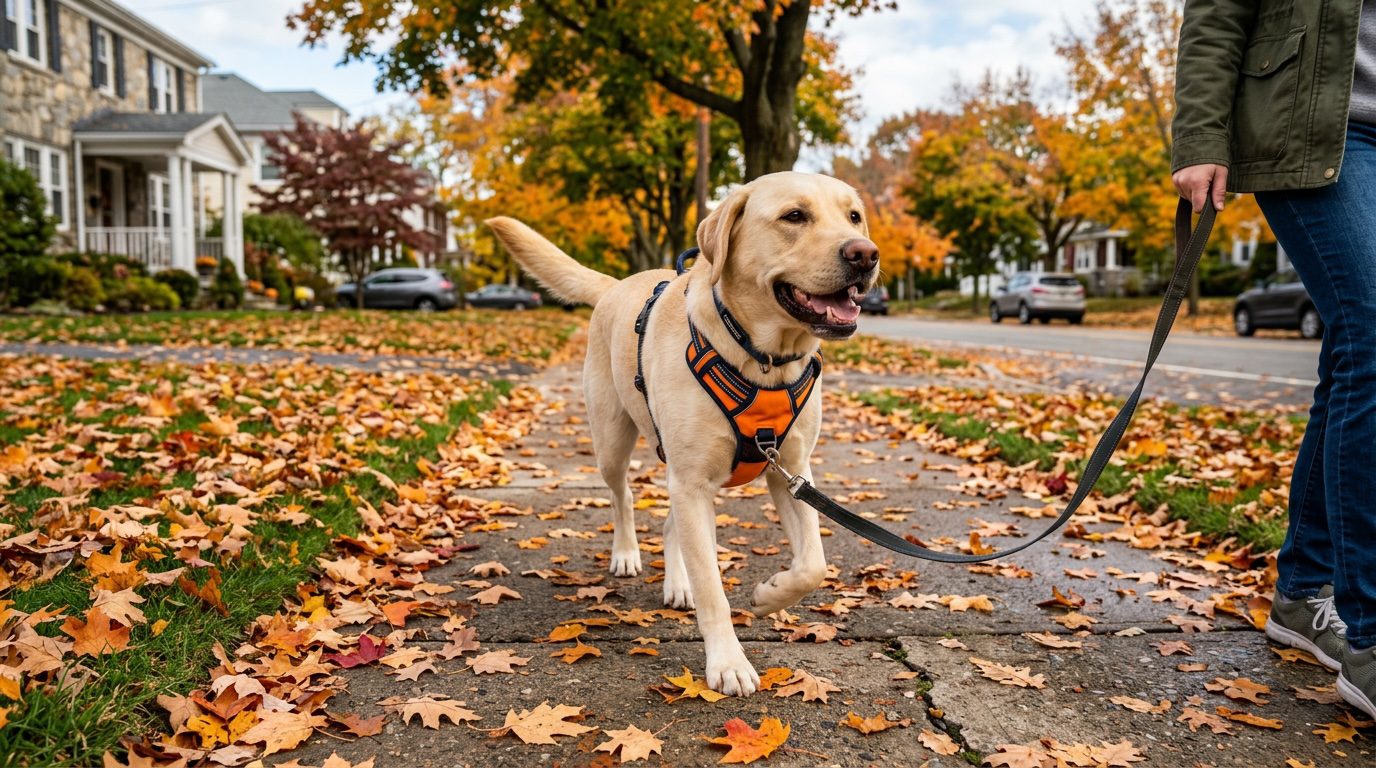
The leash attaches to a ring in the middle of your dog’s chest. When your dog lunges forward, the leash pulls the chest to the side and turns them back toward you. They can’t get the straight-line leverage they need to drag you down the street. According to Dr. Amy Attas, a veterinarian quoted by the American Kennel Club, that redirection is exactly why front-clip harnesses suit dogs who pull.
The tradeoff is convenience. The clip sits under your dog’s chin, so it’s a little awkward to attach, and the leash can loop around the front legs, especially on a long or retractable leash.
Back-clip harnesses
The leash attaches between the shoulder blades. This is the classic harness: easy to clip on, rarely tangles, and comfortable for dogs that don’t pull. AKC recommends back-clip harnesses for well-trained dogs.
The catch: a back clip gives a pulling dog more leverage, not less. It’s the same principle as a sled-dog harness. If your dog already pulls, a back-clip harness can make it worse.
Dual-clip harnesses
These have both rings. You start on the front clip for control and move to the back clip as your dog improves, which is the approach Dr. Attas describes for teaching a dog to walk in a harness. For most owners, this is the one to buy, because you won’t need a second harness once training works.
Do Front-Clip Harnesses Hurt a Dog’s Shoulders?
You’ll see this claim a lot: that front-clip harnesses with a strap straight across the chest restrict how far your dog’s front legs can reach, and that “Y-shaped” harnesses are safer.
The best-known study on this is a 2019 paper in Veterinary Record that filmed nine dogs walking and trotting on a treadmill in two harness types. Both harnesses reduced shoulder extension compared with no harness at all. But the surprise was the direction: the harness considered non-restrictive reduced shoulder movement slightly more, by 2.6 degrees at a walk and 4.4 degrees at a trot, than the one considered restrictive.
What that means for you: it’s a small study, and it doesn’t settle the debate. But it does suggest that fit matters more than harness shape. Any harness should let you slide two fingers under every strap, sit well behind the front legs so it doesn’t rub the armpits, and not ride up onto the throat. Whatever you buy, check those three things on the first few walks.
Which Should You Choose?
Here’s how I’d settle the front clip vs back clip harness choice for different dogs:
- Your dog pulls hard: front-clip or dual-clip, used on the front ring.
- Puppy or newly adopted dog: dual-clip. Train on the front, graduate to the back. Pair it with our guide to training a new puppy.
- Calm adult dog: back-clip. Simple and comfortable.
- Small or toy breed: back-clip. Small dogs rarely pull hard enough to need a front clip, and their necks are the most fragile.
- Hiking or running: a dual-clip with a padded chest plate, so you can switch clips depending on the trail.
- Reactive dog: front or dual clip, ideally with a handle on the back, plus help from a trainer.
The Harnesses I’d Actually Buy
Best Front-Clip: PetSafe Easy Walk
(4.3★ · 49,000+ reviews at the time of writing) View on Amazon →
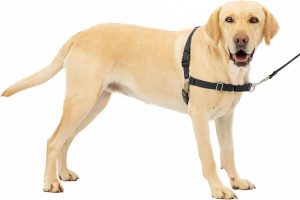
The Easy Walk is the harness most trainers have seen a thousand times. It’s simple, cheap (about $23 at the time of writing), and its front clip redirects pulling the way it’s supposed to. With over 49,000 Amazon reviews, it’s also the most battle-tested option here.
Best for: Dogs who pull, owners on a budget, anyone who wants to try a front clip before spending more.
The honest downside: fit and durability. In Amazon’s review breakdown, more owners mention fit negatively than positively, and durability complaints outnumber praise roughly two to one. The strap-style design also slides around more than a padded vest. Measure carefully, and check for rubbing behind the front legs.
Best Dual-Clip Overall: Ruffwear Front Range
(4.6★ · 19,000+ reviews at the time of writing) View on Amazon →
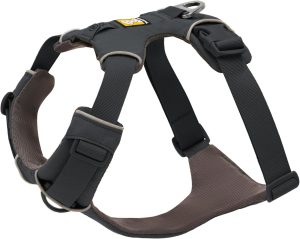
If I could only own one harness, it would be this one. It has front and back clips, a padded chest and belly, and it holds its shape walk after walk. Reviewers consistently praise quality, comfort, and construction, with very few complaints about sturdiness. It runs about $60 at the time of writing.
Best for: Most dogs. Training on the front clip, everyday walks on the back.
The honest downside: price, and it doesn’t fit every body shape. Some owners of deep-chested breeds report the harness shifting; check “secure fit” in the reviews for your dog’s breed.
Best Budget Dual-Clip: Rabbitgoo No-Pull Harness
(4.4★ · 7,200+ reviews at the time of writing) View on Amazon →
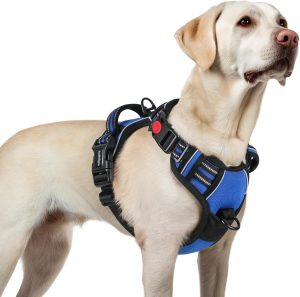
At about $15, the Rabbitgoo gives you front and back clips, padding, and a top handle for a fraction of the Ruffwear’s price. It’s a good first harness while you figure out what your dog needs.
The honest downside: it’s not as durable, and the fit isn’t as refined. Expect to replace it sooner.
Best for Strong Pullers: 2 Hounds Design Freedom
(4.3★ · 13,000+ reviews at the time of writing) View on Amazon →
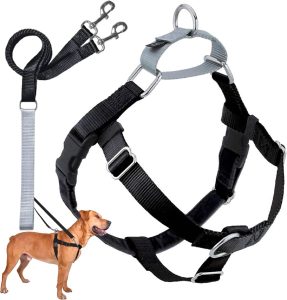
The Freedom combines a front clip with a back ring that tightens slightly when your dog pulls, and the bundle includes a double-ended leash so you can use both at once. Reviewers rate it highly for control and sturdiness.
The honest downside: more reviewers mention durability negatively than positively, and it costs about $46. It’s worth it for a serious puller; overkill for a casual one.
Best Back-Clip for Small Dogs: Puppia Soft Harness
(4.3★ · 25,000+ reviews at the time of writing) View on Amazon →
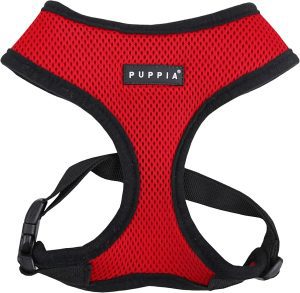
The Puppia is a soft, padded vest-style harness with a back clip, and it’s been a go-to for small breeds for years. It spreads pressure across the chest instead of the throat, which is what you want for a Chihuahua or Yorkie.
The honest downside: sizing. Most reviewers who mention size do so negatively. Measure your dog’s chest, not neck, and check Puppia’s chart for the exact size you order. For more small-dog options, see our best harnesses for small dogs.
Joe’s Take
After a lifetime of dogs, here’s what I’ve learned about the front clip vs back clip harness debate: the harness isn’t the training, it’s the steering wheel. A front clip makes a puller manageable while you teach loose-leash walking. Once your dog gets it, move to the back clip and enjoy easier walks.
One Northeast-specific tip: if your dog wears a coat in winter, buy the harness to fit over it, or loosen it a notch when the coat goes on. A harness sized for a bare dog can rub badly over a jacket. Our guide to how cold is too cold for dogs covers winter walks in more detail.
Want more options? Our ranking of the best no-pull dog harnesses compares six models side by side, and our best dog leashes guide covers what to clip on the other end.
Front-Clip vs Back-Clip Harness FAQ
Front clip vs back clip harness: which is better? Front-clip is better for dogs that pull. Back-clip is better for calm walkers and small dogs. A dual-clip harness lets you use whichever one your dog needs.
Do front-clip harnesses stop pulling? They reduce it by turning your dog sideways when they lunge, but they don’t teach your dog not to pull. Pair one with loose-leash training.
Can a back-clip harness make pulling worse? It can. A back clip lets a dog lean into the harness and pull with their whole body, the same way sled dogs do.
Are front-clip harnesses bad for dogs’ shoulders? The evidence is limited. One small 2019 study found that both common harness styles slightly reduced shoulder movement, and the one considered non-restrictive actually reduced it more. Good fit matters more than style.
Can I leave a harness on my dog all day? It’s best to take it off at home. Harnesses left on can rub, mat fur, and catch on things.
What size harness should I get? Measure the widest part of your dog’s ribcage, just behind the front legs, and use the brand’s chart. Between sizes, follow the brand’s advice; it varies.
Related reading: Best No-Pull Dog Harnesses | Best Harnesses for Small Dogs | Best Dog Leashes | How to Socialize a Dog