What Human Foods Can Dogs Eat? (The Complete Safe & Toxic List)
PetGearPal is reader-supported. If you buy through links on this page, we may earn a commission at no extra cost to you. As an Amazon Associate, we earn from qualifying purchases.
Last updated: June 2026 | ~1,950 words
Your Dog Wants Whatever You’re Having. Here’s What’s Actually Safe.
If your dog has ever fixed you with the most earnest stare while you ate something, you already know the question: can they have some? The honest answer is that many human foods are perfectly safe for dogs — and a handful are genuinely dangerous, even in small amounts. The distinction matters because “dogs are fine, they’ll eat anything” is one of the more harmful pieces of casual pet advice out there.
This guide covers what human foods dogs can safely eat, what they absolutely cannot, and a gray zone in the middle where the answer depends on quantity and individual dogs. Bookmark it — it’s the kind of thing you’ll come back to.
Quick rule of thumb: When in doubt, don’t. And if your dog has eaten something you’re not sure about, a telehealth vet through a service like Dutch can give you a professional answer in minutes without an ER visit.
✅ Human Foods That Are Safe for Dogs
Proteins
Cooked chicken — One of the safest and most digestible proteins for dogs. Plain, boneless, skinless cooked chicken is excellent. No seasoning, no garlic, no onion. It’s also the base of most high-quality training treats and a common ingredient in sensitive-stomach diets.
Cooked salmon — A strong yes. Salmon is rich in omega-3 fatty acids that support skin, coat, and joint health. Must be fully cooked — raw salmon can carry a parasite (Neorickettsia helminthoeca) that causes salmon poisoning disease in dogs. Remove all bones.
Cooked eggs — Safe and nutritious. Eggs are a complete protein source and easy to digest. Scrambled or hard-boiled, no butter or oil. Some dogs get gas from eggs — start with small amounts.
Plain cooked turkey — Safe in the same way as chicken: plain, boneless, skinless, no seasoning. Be careful at Thanksgiving — turkey cooked with onion, garlic, or butter is not safe.
Lean cooked beef — Safe when plain and unseasoned. Ground beef cooked and drained is fine. Avoid fatty cuts — high fat content can trigger pancreatitis in some dogs.
Fruits
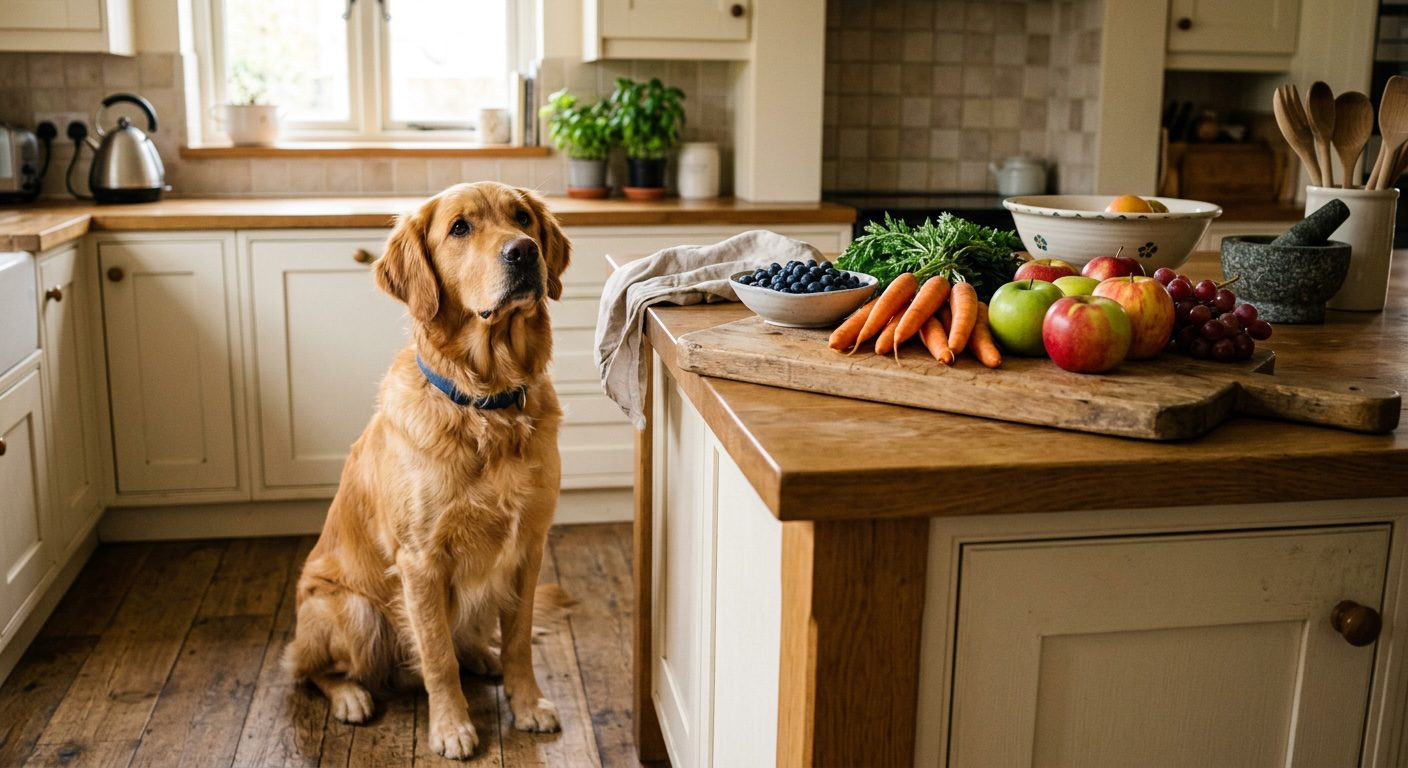
Apples — Yes, with caveats. The flesh is safe and dogs often love it. Remove the core and seeds — apple seeds contain amygdalin, which releases cyanide when metabolized. One or two slices as a treat is fine.
Blueberries — One of the better fruits for dogs. Low sugar, high antioxidants, appropriate portion size naturally. Easy to use as training rewards.
Watermelon — Safe in moderate amounts. Remove seeds and rind — rind can cause digestive upset. High water content makes it a good summer treat.
Bananas — Safe in small amounts. High in sugar and potassium — good as an occasional treat, not a daily staple. Some dogs love frozen banana pieces.
Strawberries — Safe. High in vitamin C and fiber, lower in sugar than bananas. Remove the stem/leaves.
Oranges — Safe in small amounts. The flesh is fine; remove peel and seeds. High acidity means some dogs with sensitive stomachs don’t tolerate it well.
Mango — Safe when the pit and skin are removed. High in vitamins A, C, E, and B6. High sugar — keep portions small.
Pineapple — Safe in small amounts. Remove the tough core and skin. The enzyme bromelain in pineapple aids protein digestion.
Vegetables
Carrots — One of the best dog-safe vegetables. Low calorie, high fiber, good for teeth as a chew. Raw or cooked. Many dogs love them.
Green beans — Excellent low-calorie snack. Plain and cooked (no salt, butter, or seasoning). Sometimes recommended by vets as a diet aid for overweight dogs.
Peas — Snow peas, sugar snap peas, and garden peas are all fine in small amounts. Avoid canned peas with added sodium.
Cucumber — Very safe, very low calorie, high water content. Good for overweight dogs as a snack substitute. No seeds needed to be removed.
Broccoli — Safe in small amounts. Broccoli florets are fine occasionally. The stalk can be a choking hazard. Large amounts can cause gas; very large amounts can be toxic due to isothiocyanates — keep portions small.
Sweet potato — Excellent for dogs when plain and cooked. High in fiber, vitamins, and antioxidants. Plain baked or boiled only — not the Thanksgiving casserole version.
Zucchini — Safe and low calorie. Raw or cooked. Good option for dogs that need to lose weight.
Cooked spinach — Safe in small amounts but shouldn’t be a regular large-portion food. High in oxalates, which can cause issues in dogs with kidney problems in large quantities.
Other
Plain rice — Safe and often recommended for dogs with upset stomachs. White rice with plain boiled chicken is a classic veterinary bland diet.
Plain oatmeal — Safe cooked and plain. Good source of fiber. No sugar, no flavoring, no raisins (raisins are toxic — more on that below).
Plain cooked pasta — Safe in small amounts. Plain only — no sauce, no garlic, no onion. Pasta is just carbohydrates with little nutritional benefit, so it’s more of a neutral treat than a health food.
Peanut butter — Safe in small amounts, with one critical caveat: must not contain xylitol, an artificial sweetener that is toxic to dogs. Check every label. Plain peanut butter with just peanuts and salt is fine. High in fat — use sparingly for overweight dogs.
Cheese — Safe in small amounts for most dogs. High in fat and lactose — some dogs are lactose intolerant and will have digestive upset. Low-fat cheeses (mozzarella, cottage cheese) are the better choice. Good for hiding pills.
Plain yogurt — Safe for most dogs in small amounts, particularly plain Greek yogurt with no artificial sweeteners. Probiotics may be beneficial. Avoid flavored yogurts with added sugar or xylitol.
Coconut — Small amounts of coconut flesh and coconut oil are safe. Medium-chain triglycerides (MCTs) may have some anti-inflammatory benefits. Don’t overdo it — high in fat.
❌ Human Foods That Are Toxic to Dogs
These are not just “not ideal” — these can cause serious illness or death.
Grapes and raisins — One of the most dangerous foods for dogs. Even small amounts can cause acute kidney failure in dogs. The mechanism isn’t fully understood, which is why no “safe” quantity exists. Raisins in trail mix, baked goods, cereal — all dangerous.
Onions, garlic, leeks, chives — All members of the Allium family are toxic to dogs, cooked or raw. They cause hemolytic anemia by damaging red blood cells. Garlic is more concentrated — even small amounts of garlic powder can be problematic. This is why so many “plain” cooked dishes that seem harmless are not.
Chocolate — Contains theobromine and caffeine, both toxic to dogs. Dark chocolate and baking chocolate are the most dangerous; milk chocolate less so but still harmful. Symptoms include vomiting, diarrhea, tremors, seizures, and in severe cases, death. No amount is considered safe.
Xylitol — An artificial sweetener found in sugar-free gum, some peanut butter brands, baked goods, candy, and some medications. Causes rapid insulin release and severe hypoglycemia in dogs. Also causes liver failure in larger doses. Can be fatal quickly.
Macadamia nuts — Toxic to dogs, causing weakness, hyperthermia, vomiting, and tremors within 12 hours of ingestion. Not usually fatal but causes significant illness.
Alcohol — Even small amounts cause serious problems in dogs — vomiting, disorientation, breathing problems, dangerously low blood sugar. Never give dogs any alcohol, including beer or wine.
Caffeine — Found in coffee, tea, energy drinks, some medications and supplements. Causes rapid heart rate, tremors, seizures. More dangerous for small dogs.
Avocado — Contains persin, which is toxic to dogs in the flesh, skin, pit, and leaves. Causes vomiting and diarrhea. The pit is also a choking and obstruction hazard.
Cooked bones — Especially chicken and pork bones. Cooked bones splinter into sharp shards that can perforate the esophagus, stomach, or intestines. Raw bones carry less risk but aren’t completely safe either.
Nutmeg — Found in baked goods, contains myristicin which causes seizures and central nervous system problems in dogs. Unlikely to be eaten in dangerous quantities but worth knowing.
Raw yeast dough — Expands in the dog’s stomach and produces alcohol as it ferments. Can cause bloat and alcohol toxicity simultaneously.
Salt in large amounts — A small amount of salt on food isn’t dangerous, but large quantities cause sodium ion poisoning — excessive thirst, urination, vomiting, tremors, and seizures.
⚠️ Gray Zone: It Depends
Milk and dairy — Not toxic but many dogs are lactose intolerant to varying degrees. Small amounts of cheese or plain yogurt are usually fine. A bowl of milk may cause diarrhea.
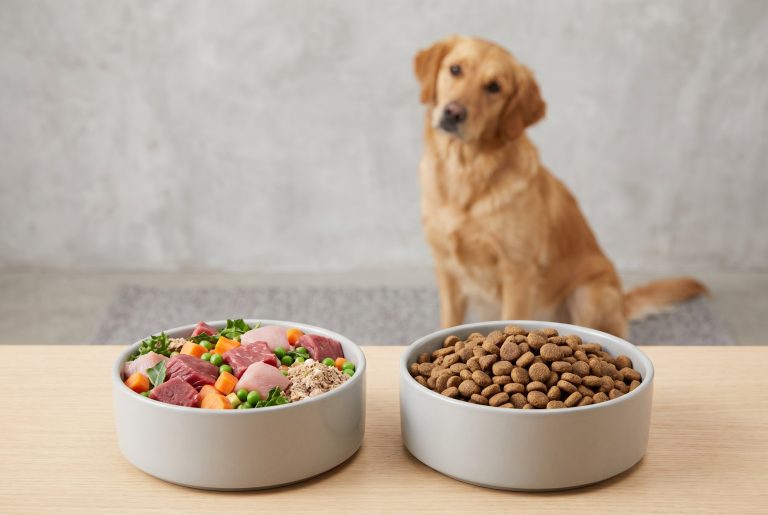
Raw meat — Controversial. Raw diets (like We Feed Raw — see our We Feed Raw review) are designed and handled safely by the manufacturer. Randomly giving raw grocery store meat carries salmonella and E. coli risks.
Tomatoes — Ripe red tomatoes are generally fine in small amounts. The green parts of the tomato plant (stems, leaves, unripe tomatoes) contain solanine and tomatine, which are toxic. Keep dogs out of tomato gardens.
Mushrooms — Store-bought mushrooms (button, portobello, shiitake) are generally safe. Wild mushrooms are a completely different matter — many wild species are highly toxic. Don’t let your dog eat wild mushrooms.
Corn — Corn kernels off the cob are safe. The cob is not — it’s a major intestinal obstruction risk and causes many dog ER visits. Don’t give your dog a corn cob to chew on.
Shrimp and shellfish — Fully cooked, plain shrimp and shellfish are safe in small amounts. Raw shellfish carries bacterial risk. Remove shells completely.
Citrus (lemon, lime, grapefruit) — Small amounts of the flesh are generally safe but the acidity upsets most dogs’ stomachs. The oils and peel are more problematic. Most dogs avoid citrus by choice.
Before the FAQ: Related Reading
If this guide has you thinking more carefully about what goes into your dog’s diet overall, a few of our articles are worth reading alongside it. Our best dog food for allergies guide covers how ingredient sensitivities connect to chronic symptoms you might be seeing. For owners considering a whole-food or raw approach to their dog’s diet, our We Feed Raw review covers a rigorously handled raw feeding option. And for training treat choices — since many of the safe foods above (chicken, blueberries, carrot pieces) make excellent training rewards — our best dog training treats guide covers what to look for in a high-value reward.
FAQ
Q: My dog ate a small piece of onion/chocolate/grape. What do I do? Call your vet or an animal poison control hotline immediately. Don’t wait for symptoms. The ASPCA Animal Poison Control Center is available 24/7 at (888) 426-4435 (consultation fee applies). Alternatively, a telehealth vet through Dutch can advise you on whether you need emergency care.
Q: How much of a safe food can my dog actually have? The standard guideline is that treats and extras — including safe human foods — should make up no more than 10% of your dog’s daily caloric intake. A 20-lb dog needs roughly 500–600 calories per day. That means about 50–60 calories maximum from extras.
Q: Can dogs eat peanut butter every day? Small amounts are fine but daily peanut butter shouldn’t be a habit — it’s high in fat and calories. More importantly, always check the label for xylitol before every new jar.
Q: Are seeds and pits from fruits always dangerous? Not all, but many. Apple seeds, cherry pits, peach pits, plum pits, and apricot pits all contain cyanogenic compounds. Watermelon seeds are generally harmless in small quantities. As a rule, always remove pits and seeds before giving fruit.
Q: My dog ate something from this toxic list — they seem fine. Should I still call the vet? Yes. Some toxins (especially grapes and xylitol) cause delayed symptoms. Dogs can appear fine for hours before organ damage becomes apparent. Don’t use “they seem okay” as the all-clear for grape or xylitol ingestion specifically.
Q: Can puppies eat the same human foods as adult dogs? The safe/toxic list is roughly the same, but puppies are more sensitive to everything. Smaller body size means smaller toxic thresholds. Stick to tiny amounts of any safe food and introduce one thing at a time.
Q: What’s the safest human food to use as a training treat? Plain cooked chicken breast, cut into pea-sized pieces, is the gold standard — high value to almost every dog, very low calorie, safe in quantity, easy to prepare in bulk. Blueberries and small carrot pieces are good lower-effort alternatives.